
I. Rising Thresholds for International Agricultural Trade Drive a Global Wave of Upgrades for Agricultural Testing Instruments
With the implementation of new sustainable agriculture regulations across Europe, the US, and Southeast Asia, and the simultaneous tightening of import/export testing standards for soil, grain, and produce by the EU’s EFSA and the US USDA, limits for pesticide residues, heavy metals, and soil fertility indicators have been further lowered. Consequently, overseas third-party agricultural laboratories, large-scale farms, and customs quarantine agencies are entering a cycle of massive upgrades for their full range of analytical instruments, making agriculture a key sector for the global expansion of laboratory instrument sales.
II. Strict Overseas Standards Make Instrument Compliance a Critical Barrier
Unlike the spot-checking of finished goods, overseas agricultural testing encompasses the entire supply chain—from cultivation soil and irrigation water to fresh crops and processed agricultural products—requiring instruments with broader applicability. For elemental analysis, atomic fluorescence spectrometers is routinely used to screen crops for arsenic, mercury, and heavy metals, as well as for soil traceability testing. Chromatographic instruments, essential for cross-border customs clearance, focus on detecting organic pesticide residues and plant growth additives. Additionally, high-precision balances, corrosion-resistant water baths, ultrapure water systems, and sample pretreatment/separation instruments form the core infrastructure of agricultural testing laboratories.
Key Applications of the Instruments:
1. Farmland Environmental Monitoring: Testing of arable soil, irrigation water, and organic fertilizers to measure heavy metals, salinity, pesticide residues, and nutrient content, providing data support for precision agriculture and soil remediation. | 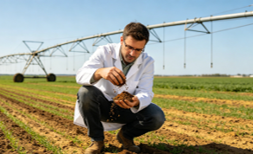 |
2. Fresh Produce and Cash Crop Testing: Screening of cash crops—including vegetables, fruits, grains, edible oils, tea, and tobacco—for organophosphorus pesticide residues, heavy metals, and mycotoxins to ensure safety at the point of harvest. |  |
3. Livestock, Poultry, and Aquaculture Testing: Testing of aquaculture water, fish and shrimp, livestock/poultry meat and eggs, and compound feeds to screen for veterinary drug residues, heavy metals, and microbial toxins, ensuring the compliant circulation of agricultural products. | 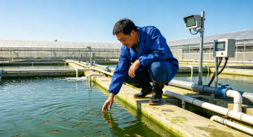 |
4. Quality Control in Deep Processing: Comprehensive safety testing—covering raw material acceptance, in-process inspections, and finished product checks—for facilities processing rice and flour products, edible oils, dried fruits, canned goods, and fermented foods. | 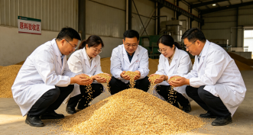 |