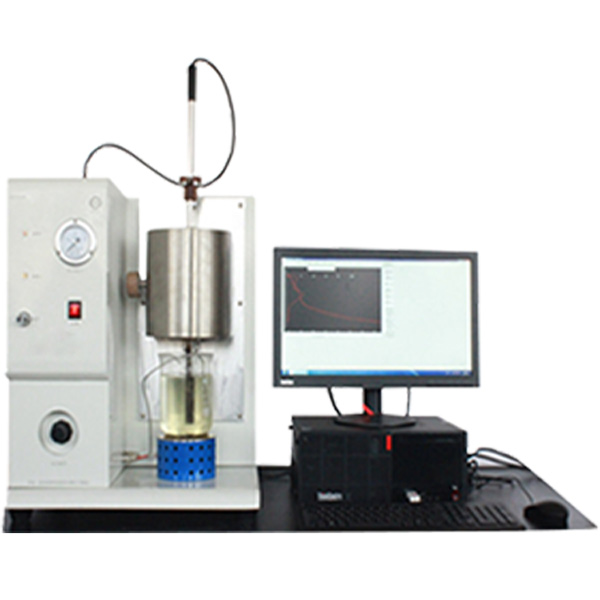

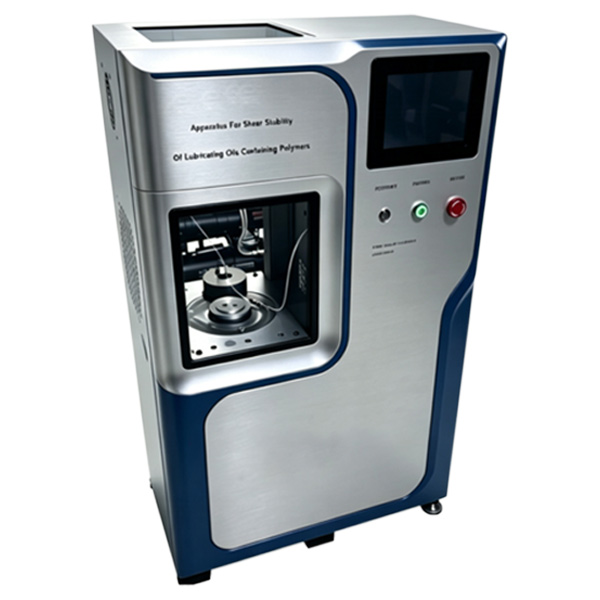
HKL-2783 Benchtop Four Ball Tester
I Overview
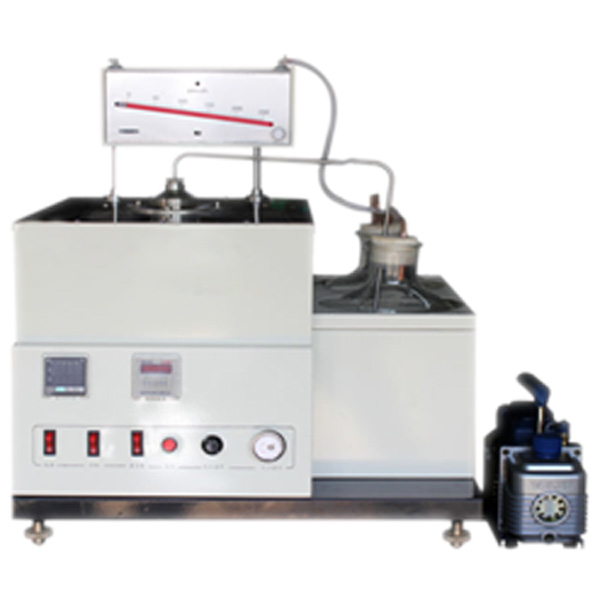
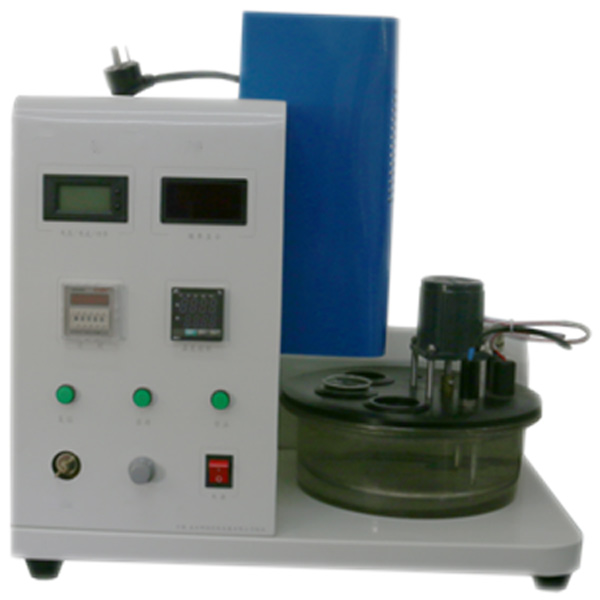
The instrument is specially made to measure the load-carrying ability of lubricants through the four-ball method, determining the maximum non-greasing load (PB), welding load (PD), and total wear value (ZMZ). It follows the requirements of ASTM D2783, ASTM D2266, and ASTM D4172. Besides, it allows for the evaluation of lubricants’ wear resistance over a long period, figuring out the long-term wear D-value, and friction force and coefficients, and it keeps a record of friction force and temperature curves.
II Functional Overview
This is a great analog signal output friction measurement system with high-precision capabilities. It is capable of providing the output in the form of RS485 signals and samples at a very high speed. Communication with the computer is done through the bus for closed-loop and end-to-end measurement and control.
This single touchscreen controller with a full set of accessories includes a mouse and keyboard.
The software is equipped with a very user-friendly interface that enables users to carry out tasks like data generation, testing, analysis, playing back, and re-examining with ease. Apart from that, the application allows users to export work in various formats (WORD, EXCEL, TXT) and it also assists in the automated creation of report that results in the streamlined data proficiency.
III Applicable Standards
Ø ASTM D2266 Standard Test Method for Wear Preventive Characteristics of Lubricating Grease (Four-Ball Method)
Ø ASTM D2596 Standard Test Method for Measurement of Extreme-Pressure Properties of Lubricating Grease (Four-Ball Method)
Ø ASTM D2783 Standard Test Method for Measurement of Extreme-Pressure Properties of Lubricating Fluids (Four-Ball Method)
Ø ASTM D4172 Standard Test Method for Wear Preventive Characteristics of Lubricating Fluid (Four-Ball Method)
Ø ASTM D5183 Standard Test Method for Determination of the Coefficient of Friction of Lubricants Using the Four-Ball Wear Test Machine
Ø IP 239:2005 Methods of test for petroleum and its products —BS 2000-239: Determination of the extreme-pressure and anti-wear properties of fluids —Four ball method (European conditions)
Ø ISO 20623:2003 Petroleum and related products — Determination of the extreme-pressure and anti-wear properties of lubricants—Four-ball method
IV Main Technical Parameters
1. Working environment requirements: Room temperature within 10–35°C; relative humidity not exceeding 80%; operating noise level ≤75 decibels.
2. Test force range (N): 5–10000 N. The testing machine exerts a stable loading force, with a fully computer-controlled servo cylinder operation that ensures no impact or pulsation at all.
3. Loading method: automatic fully servo electric cylinder based loading.
4. Method of measuring scratch diameter: Automatically through a microscope or software measurement (preferably using the CCD scratch measurement system).
5. Allowable error of test force:
① When ≤4% FS, the reading error is ≤±2N and the reading repeatability is ≤2N.
② When>4% FN, the relative indication error shall be ≤±0.5%, and the indication repeatability shall be ≤0.5%.
6. Test force retention: The test force shall be maintained for no less than 24 hours, with variations during this period ≤±0.5%FS.
7. Error tolerance of friction force: The friction force measurement by the testing machine can have a ±0.5% maximum error limit, and the reading repetition maximum error limit is 0.5%.
8. Technical requirements for the spindle and servo loading device:
① The radial circular runout of the spindle conical hole of the test machine is ≤0.010 mm and the highest speed of rotation is 3000 r/min.
② The spring collet carrying the steel balls is fixed right after the taper hole of the testing machine spindle. The radial runout of the steel balls is kept ≤0.015 mm.
③ The coaxiality error between the test machine spindle and the worktable oil reservoir shall be ≤φ0.150 mm.
④ The deviation in perpendicularity between the spindle of the testing machine and the horizontal plane of the worktable shall not exceed 0.030 mm.
9. Technical Requirements for the Test Force Measurement System:
① The testing force measurement system features a zero-setting function;
② The force measurement system has a resolution of ≤0.01 N;
③ The discrimination threshold of the force measurement system is ≤0.01%FS.
④ Before the operation, let the testing machine warm up for 30 minutes while making sure the zero point drift during this time is ≤±0.2%FS.
⑤ If the force applied by the testing machine is less than zero, the force indicating device will show this value with a negative sign.
⑥ After the force is removed, the reading can return to the zero position, with a relative zero error of ≤±0.1%FN.
10. Technical Requirements for Friction Measurement Systems:
① The friction measurement system can have a zero-setting function;
② The measurement system for friction force has a resolution of ≤1 N.
③ The zero-point drift of friction force within 30 minutes is ≤±0.2%.
④ If the friction value of the testing machine is below zero, the friction indicator will show a negative value.
⑤ After removing the friction force, the reading can return to the zero position, with a relative zero error of ≤±0.1%.
11. Technical requirements for the sample clamping device:
① No relative sliding happens between the conical hole of the testing machine spindle and the spring chuck, neither between the spring chuck and its internal steel balls during the test procedure.
② During the test, the three steel balls inside the oil tank did not exhibit any relative movement or rolling.
③ After a 30-minute operation with a reference oil at a test force of 147N or 392N, the disparity between the average diameters of the three spots made by steel ball wear and the average diameter for any one steel ball wear spot should be ≤0.04 mm.
12. Technical requirements for timing display devices:
This testing machine has a timing display and control device that enables switching the display units between minutes and seconds. The timing accuracy is ensured with the maximum tolerance of error being ±1/60 of the measured value. Once the test duration surpasses the preset value, the spindle will be stopped immediately and the display will show the remaining test time.
13. Technical requirements for the spindle speed control and display device:
① The maximum allowable error of the test machine spindle speed is ±3 rpm.
② A panel for control and display of the spindle speed is installed on the testing machine. When the spindle speed reaches the preset value, it stops running.
14. Technical requirements for the fuel tank and heating device:
① Oil tank and heating device made to keep close contact with each other high insulation can be achieved. The insulation resistance can be guaranteed under operation is not less than 50 MΩ.
② The temperature of the oil tank is elevated from room temperature to 260°C in a period of about 40 minutes. At 75°C, the actual heating time is never more than 10 minutes, and no oil leakage is detected in the tank.
③ Once the heating oil tank temperature hits 75°C, the fluctuation during a 10-minute steady temperature phase should not exceed ±1°C.
15. Technical requirements for safety devices:
① Once the test force goes beyond 2% to 10% of the maximum capacity of the testing machine, the safety device will get triggered right away, and as a result the machine will perform an automatic shut down and also an alarm will be sounded.
② If the friction force exceeds the preset value, the safety device will trigger an alarm display, and the spindle will stop rotating automatically.
③ During sample sintering, the safety device can activate immediately, causing the main spindle to stop automatically.
16. Precision technical requirements:
The testing machine was following the ASTM D2783 procedure to carry out the evaluation. ASTM D2783 Standard Test Method for Measurement of Extreme-Pressure Properties of Lubricating Fluids (Four-Ball Method). The test results shall not exceed the following limits:
① Repeatability: Maximum non-card bite load: 15% of the mean value; Sintering point: First-level load increment; Load-wear index: 17% of the mean value.
② Reproducibility: Maximum non-grip load: 30% of the average value; Sintering point: First-level load increment; Load-wear index: 44% of the average value.
17. Technical requirements for appearance and electrical equipment:
For the testing machine, its assembly quality, mechanical safety protection, and appearance quality shall be in line with the provisions of Chapters 4 and 10 of GB/T 2611-2007 respectively; the electrical equipment utilized in the testing machine shall conform to the requirements of Chapter 7 of GB/T 2611-2007. The machine is roughly 800×530×1250 mm in size, its weight is about 150 kg.
19. Attached: MC-2000 CCD Wear Scar Measurement System
FAQ
Q1: What is the minimum order quantity? How long is the delivery lead time?
A: The minimum order quantity is one unit, and delivery is approximately 20 days after advance payment.
Q2: How can I get a product quotation?
A: Please submit your requirements via the contact page on our official website or customer service email, and we will contact you within 24 hours with a detailed quotation.
Q3: Do you offer customized solutions?
A: Yes, we can provide customized instrument configurations and testing solutions based on the customer’s specific application need

About us
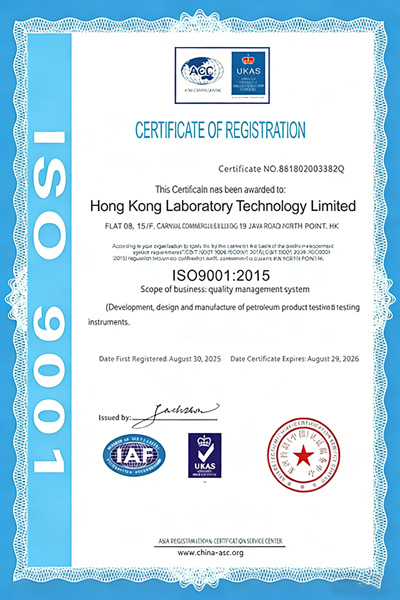
Hong Kong Laboratory Technology Limited specializes in supply chain integration and full-chain technical services for laboratory instruments. With years of industry expertise, our company operates under a stringent quality management system, complying with multiple international standards including ISO 9001, ASTM, and IP requirements. The core products not only comply with the ISO/IEC 17025 instrument calibration and testing standards, but are also widely used in research institutions,petrochemical andmining industries, medical institutions,and environmental protection departments. This high-standard quality has earned broad market and customer trust.
Company Advantages
(1)Full-Chain Resource Integration Capability
(2)Professional Technical Service Team
(3)Rich Industry Practical Cases
(4)Reliable After-Sales Service
Service Guarantee
1. Online Training Services
If assistance is needed, we will provide online installation and commissioning services, as well as comprehensive operation training for you. Meanwhile, we also offer 24/7 online training support for end users throughout the year.
2. Professional After-Sales Service
According to the type of instrument, we can provide specialized maintenance services. Our goal is to become the highest-quality and most reliable instrument supplier in the market. We welcome your valuable opinions and suggestions to help us continuously improve our service quality.
Logistics and Shipping
Worldwide Shipping: We have extensive experience in shipping goods to Asia, Europe, the Middle East, and other regions.
Secure Packaging: Laboratory instruments are carefully packed to ensure they are properly secured and protected during transit.
International Certification
|
|
ISO 9001 Certification | ASTM Certificate |