

Detection Target
Determination of SBS Content in Modified Asphalt
Overview
This solution conforms to the AASHTO T 302-15 Standard Method of Test for Polymer Content of Polymer-Modified Emulsified Asphalt Residue and Asphalt Binders. This test method is used to determine the percent concentration of a Styrene-Butadiene-Rubber (SBR), Styrene-Butadiene (SB), or Styrene-Butadiene-Styrene (SBS) polymer in a polymer-modified asphalt binder or emulsified asphalt residue. By using the infrared spectrum and the principles of Beer's Law, the polymer content of the asphalt material can be determined.
Principle
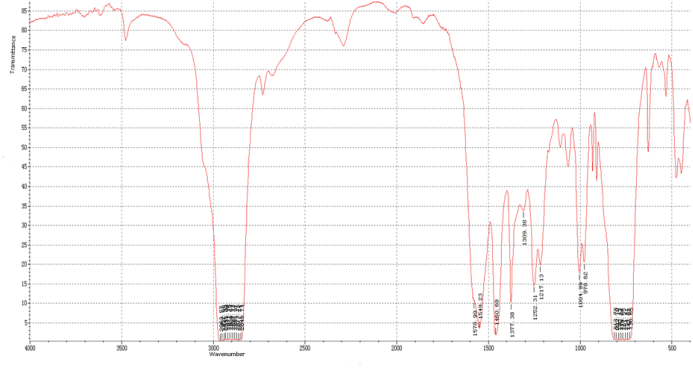
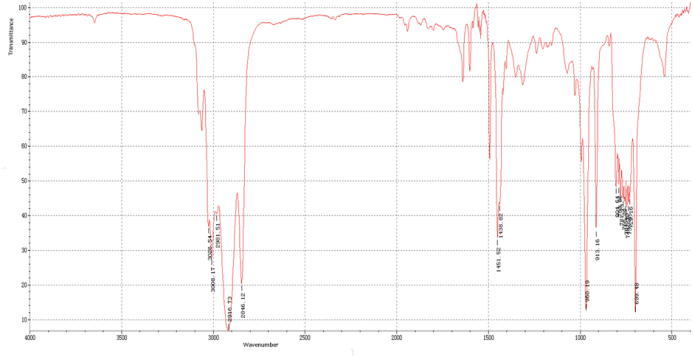
In the infrared spectrum of modified asphalt, the characteristic absorption peaks at 966 cm-1 (C=C bond C-H bending vibration) and 1377 cm-1 (CH3 group C-H bending vibration) are selected as SBS-specific peaks for content determination. The peak areas (A966 and A1377) are measured, and their ratio (A966/A1377) is calculated. A linear calibration curve is then established between this peak area ratio and the SBS content.
Operating Conditions
Instruments and Accessories
(1) HKL-302 FTIR Spectrometer for SBS content in Modified Asphalt
(2) Liquid Test Accessory : Demountable Liquid Cell (KBr windows)
Others
(1) Tetrachloroethylene (C2Cl4)
(2) Base asphalt
(3) SBS standard
(4) Analytical balance
Test Condition
(1) Resolution: 4 cm-1
(2) Scan times: 32
(3) Detector: Pyroelectric infrared detector
Test Results
FTIR Spectra of Base Asphalt and SBS Modifier
|
Figure 1 Base Asphalt |
|
Figure 2 SBS Modifier |
Calibration Curves of SBS-Modified Asphalt at Different Concentrations
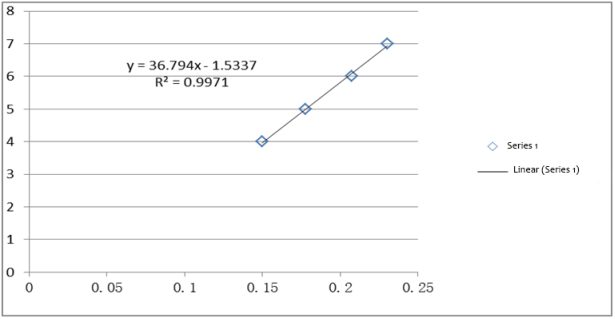
The SBS-modified asphalt samples with different concentrations were dissolved and coated into thin films. Using Tetrachloroethylene (C2Cl4) as the background, the peak areas at 966 cm-1 and 1377 cm-1 were recorded. A working curve was established by plotting the peak area ratio (A966/A1377) on the x-axis against the SBS content on the y-axis (as shown in the figure below).
|
Figure 3 Calibration Curves of SBS-Modified Asphalt at Different Concentrations |
Conclusion
Based on the Lambert-Beer Law, which establishes a proportional relationship between the infrared absorption intensity of characteristic functional groups in the SBS modifier at specific wavenumber and its concentration, the correlation between the peak area ratio (966 cm-1/1377 cm-1) and the modifier content was verified using Fourier transform infrared (FTIR) spectroscopy. The results demonstrate that this method for determining SBS content in modified asphalt is accurate, rapid, and exhibits a calibration curve correlation coefficient (R2) of 0.99, meeting the requirements for quantitative analysis.