

Detection target
Detection of pesticide residues
Introduction
Pesticide residue testing involves the qualitative and quantitative analysis of pesticides and their metabolites that may remain in agricultural products, food, and the environment. Its purpose is to ensure food safety, protect public health, and promote sustainable agricultural development. With the widespread use of chemical pesticides in agricultural production, the problem of pesticide residues in crops, soil, and water sources is becoming increasingly prominent. These residues can enter the human body through the food chain, potentially leading to acute poisoning, chronic diseases, and even cancer risks. Pesticide residue testing techniques primarily utilize gas chromatography and must cover various types of pesticides, including organophosphates, organochlorines, and pyrethroids. Through systematic monitoring and risk assessment, pesticide residue testing provides crucial scientific evidence for agricultural product quality and safety regulation, international trade compliance, and environmental protection.
Overview
This solution conforms to the AOAC Official Method 2007.01 Pesticide Residues in Foods by Acetonitrile Extraction and Partitioning with Magnesium Sulfate Gas Chromatography / Mass Spectrometry and Liquid Chromatography / Tandem Mass Spectrometry. AOAC Official Method 2007.01 is a standard method for the determination of multiple pesticide residues in food, based on the QuEChERS method. It utilizes 1% acetic acid acetonitrile extraction, acetate buffer salting-out, and PSA/MgSO₄ dispersive solid-phase extraction (dSPE) cleanup, combined with GC/MS and LC/MS/MS for qualitative and quantitative analysis. It is suitable for fruits and vegetables with high water content.
Apparatus
HKL-2007 Gas Chromatograph for Pesticide Residue
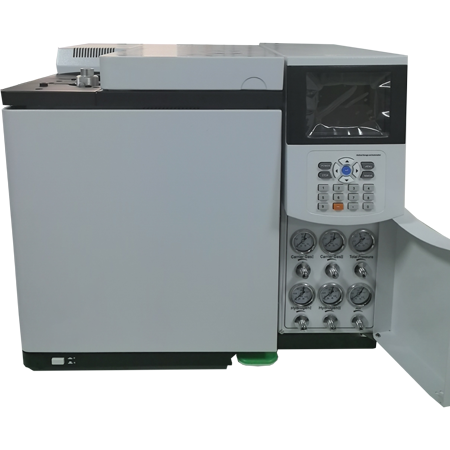
Configuration
Serial | Name | Specification | Number |
1 | Gas Chromatograph | Main unit + FID + capillary inlet + packed column inlet + dedicated workstation | 1 set |
2 | Electron Capture Detector (ECD) + Amplifier Board | Analysis: Organochlorine pesticides | 1 set |
3 | Flame Photometric Detector (FPD) + Amplifier Board | Analysis: Organophosphorus pesticides | 1 set |
4 | Organochlorine Pesticides GC Column | 30 m × 0.32 m × 0.5m (includes test standard) | 1 set |
5 | Organophosphorus Pesticides GC Column | 30 m × 0.32 m × 0.5m (includes test standard) | 1 bottle |
6 | Air Generator | 1) Air purity: Oil-free, triple-filtered 2) Output flow: 0–3 L/min 3) Input pressure: 0–0.4MPa (adjustable) 4) Rated power: 150 W | 1 set |
7 | Hydrogen Generator | 1) Hydrogen purity: 99.999% 2) Output flow: 0–300 ml/min 3) Input pressure: 0–0.4 Mpa 4) Rated power: <150 W | 1 set |
8 | Nitrogen Cylinder | 1) Purity: 99.999% 2) Cylinder + regulator or generator | User-supplied |
9 | Computer + Printer | User-supplied |