

Detection Target
Determination of copper (Cu), lead (Pb), cadmium (Cd), arsenic (As), and mercury (Hg) in Grains
Overview
Foods may contain metal elements such as lead, cadmium, and mercury, which can severely impact human health . Heavy metal testing has become a critical indicator in food safety assessment. In this project, five elements—copper, lead, cadmium, arsenic, and mercury—are selected for analysis in pretreated grain samples.
Apparatus
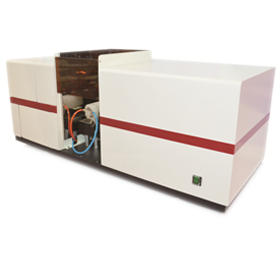
HKL-999.11 AAS for Copper, Lead and Cadmium content in grains
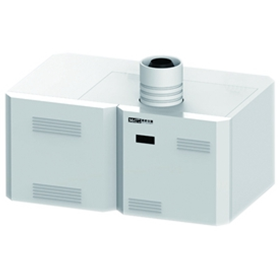
HKL-680 AFS for As and Hg element content in grains
Solution
I.Flame Atomic Absorption Spectrometry (Cu)
1. Preparation of Standard Curve
1) Transfer 5 ml of Cu standard solution (1000 mg/L) into a 100 ml volumetric flask and dilute to the mark with deionized water to obtain a 50 mg/L Cu standard stock solution.
2) Aliquot 0, 0.5, 1, 2, 5, and 10 ml of the stock solution into six separate 100 ml volumetric flasks. Add 3 ml of nitric acid solution to each flask, then dilute to the mark with deionized water to prepare standard solutions with Cu concentrations of 0 mg/L, 0.25 mg/L, 0.5 mg/L, 1.0 mg/L, 2.5 mg/L, and 5.0 mg/L, respectively.
2. Sample Pretreatment
Weigh 2.0 g of sample into a porcelain crucible. Gradually carbonize the sample using an adjustable electric heater at low heat, then transfer to a muffle furnace for ashing at 500°C for 6-8 hours. After complete cooling, add 5 ml of nitric acid (1:1) to the crucible and heat on the adjustable electric heater until boiling for 30 seconds. Allow to cool completely, and then transfer to a colorimetric tube with deionized water for analysis.
In parallel, dry and grind the sample, then store in a plastic bottle as backup. Weigh 2.000 g of this prepared sample into a porcelain crucible. Repeat the carbonization and ashing process as described above. After cooling, dissolve the residue with 0.3% nitric acid, transfer to a colorimetric tube, and mix thoroughly for analysis.
II.Graphite Furnace Atomic Absorption Spectrometry (Pb, Cd)
1. Preparation of Standard Curve
1) Transfer 5 ml of Pb, Cd standard solution (1000 mg/L) into a 100 ml volumetric flask and dilute to the mark with deionized water to obtain a 50 mg/L Pb, Cd standard stock solution.
2) Aliquot 0, 0.5, 1, 2, 5, and 10 ml of the stock solution into six separate 100 ml volumetric flasks. Add 3 ml of nitric acid solution to each flask, then dilute to the mark with deionized water to prepare standard solutions with Pb, Cd concentrations of 0 mg/L, 0.25 mg/L, 0.5 mg/L, 1.0 mg/L, 2.5 mg/L, and 5.0 mg/L, respectively.
3) Then use the autosampler to aspirate and inject the solutions into the graphite furnace for absorbance measurement, and finally plot the concentration-absorbance calibration curve.
2. Sample Pretreatment
The method is the same as above.
III.Atomic Fluorescence Spectrometry (As, Hg)
1. Preparation of Standard Solutions
Arsenic (As)
(1) Preparation of As Standard Solutions
① 10% Thiourea and 10% Ascorbic Acid Mixed Solution: Weigh 10 g thiourea and 10 g ascorbic acid into a beaker, add 100 ml water, and mix well to prepare 100 ml of the mixed solution.
② 10 mg/L Arsenic Stock Solution: Pipette 1 ml from a 1000 mg/L arsenic standard solution and dilute to 100 ml in a volumetric flask.
③ 100 μg/L Arsenic Stock Solution: Pipette 1 ml from the 10 mg/L arsenic standard solution and dilute to 100 ml in a volumetric flask.
④ 1 μg/L Arsenic Standard Solution: Pipette 1 ml from the 100 μg/L arsenic stock solutions, add 5 ml concentrated hydrochloric acid, and 10 ml of the 10% thiourea and 10% ascorbic acid mixed solution, then dilute to 100 ml in a volumetric flask.
⑤ 2 μg/L Arsenic Standard Solution: Pipette 2 ml from the 100 μg/L arsenic stock solution, add 5 ml concentrated hydrochloric acid, and 10 ml of the 10% thiourea and 10% ascorbic acid mixed solution, then dilute to 100 ml in a volumetric flask.
⑥ 4 μg/L Arsenic Standard Solution: Pipette 4 ml from the 100 μg/L arsenic stock solution, add 5 ml concentrated hydrochloric acid, and 10 ml of the 10% thiourea and 10% ascorbic acid mixed solution, then dilute to 100 ml in a volumetric flask.
⑦ 8 μg/L Arsenic Standard Solution: Pipette 8 ml from the 100 μg/L arsenic stock solution, add 5 ml concentrated hydrochloric acid, and 10 ml of the 10% thiourea and 10% ascorbic acid mixed solution, then dilute to 100 ml in a volumetric flask.
⑧ 10 μg/L Arsenic Standard Solution: Pipette 10 ml from the 100 μg/L arsenic stock solution, add 5 ml concentrated hydrochloric acid, and 10 ml of the 10% thiourea and 10% ascorbic acid mixed solution, then dilute to 100 ml in a volumetric flask.
⑨ Arsenic Standard Blank: Add 5 ml concentrated hydrochloric acid and 10 ml of the 10% thiourea and 10% ascorbic acid mixed solution to a 100 ml volumetric flask, then dilute to the mark.
(2) Carrier Solution 5% Hydrochloric Acid (v/v): Measure 25 ml concentrated hydrochloric acid and dilute to 500 ml with deionized water.
(3) Preparation of Reducing Agent 0.5% Potassium Hydroxide (KOH) + 2% Potassium Borohydride (KBH4): Dissolve 2.5 g KOH in deionized water (ensure complete dissolution). Add 10 g KBH4 to the KOH solution. Dilute to 500 ml with deionized water and mix thoroughly. (Prepare fresh before use, avoid overnight storage. Do not reverse the preparation order.)
(4) Sample Preparation
① Sample Blank: Pipette 5 ml of microwave-digested blank sample into a 50 ml volumetric flask. Add 2.5 ml concentrated HCl and 5 ml of the 10% thiourea + 10% ascorbic acid mixed solution. Dilute to the mark with water.
② Test Sample Solution: Pipette 5 ml of microwave-digested sample into a 50 ml volumetric flask. Add 2.5 ml concentrated HCl and 5 ml of the 10% thiourea + 10% ascorbic acid mixed solution. Dilute to the mark with water.
Mercury (Hg) — preheating time for mercury: 30 minutes
(1) Preparation of Hg Standard Solutions
① 10% Potassium Dichromate Solution: Weigh 10 g potassium dichromate (K2Cr2O7) into a 100 ml volumetric flask, and dilute to the mark with water.
② 10 mg/L Mercury Stock Solution: Pipette 1 ml from a 1000 mg/L mercury standard solution and dilute to 100 ml in a volumetric flask.
③ 100 μg/L Mercury Stock Solution: Pipette 1 ml from the 10 mg/L mercury standard solution and dilute to 100 ml in a volumetric flask.
④ 1 μg/L Mercury Standard Solution: Pipette 1 ml from the 100 μg/L mercury stock solution, add 2 ml concentrated nitric acid and 1 ml 10% potassium dichromate solution, and then dilute to 100 ml in a volumetric flask.
⑤ 2 μg/L Mercury Standard Solution: Pipette 2 ml from the 100 μg/L mercury stock solution, add 2 ml concentrated nitric acid and 1 ml 10% potassium dichromate solution, and then dilute to 100 ml in a volumetric flask.
⑥ 4 μg/L Mercury Standard Solution: Pipette 4 ml from the 100 μg/L mercury stock solution, add 2 ml concentrated nitric acid and 1 ml 10% potassium dichromate solution, and then dilute to 100 ml in a volumetric flask.
⑦ 8 μg/L Mercury Standard Solution: Pipette 8 ml from the 100 μg/L mercury stock solution, add 2 ml concentrated nitric acid and 1 ml 10% potassium dichromate solution, and then dilute to 100 ml in a volumetric flask.
⑧ 10 μg/L Mercury Standard Solution: Pipette 10 ml from the 100 μg/L mercury stock solution, add 2 ml concentrated nitric acid and 1 ml 10% potassium dichromate solution, and then dilute to 100 ml in a volumetric flask.
⑨ Mercury Standard Blank: Add 2 ml concentrated nitric acid and 1 ml 10% potassium dichromate solution to a 100 ml volumetric flask, then dilute to the mark.
(2) Carrier Solution 2% Nitric Acid (v/v): Measure 10 ml concentrated nitric acid and dilute to 500 ml with deionized water.
(3) Preparation of Reducing Agent (Cold Vapor Mercury) 0.5% Potassium Hydroxide (KOH) + 0.01% Potassium Borohydride (KBH4): Dissolve 2.5 g KOH in deionized water (ensure complete dissolution). Add 0.05 g KBH4 to the KOH solution. Dilute to 500 ml with deionized water and mix thoroughly.( Prepare fresh before use, avoid overnight storage. Critical: The preparation sequence must not be reversed.)
(4) Sample Preparation
① Sample Blank: Pipette 5 ml of microwave-digested blank sample into a 50 ml volumetric flask. Add 1 ml concentrated nitric acid and 0.5 ml 10% potassium dichromate solution. Dilute to the mark with deionized water.
② Test Sample Solution: Pipette 5 ml of microwave-digested sample into a 50 ml volumetric flask. Add 1 ml concentrated nitric acid and 0.5 ml 10% potassium dichromate solution. Dilute to the mark with deionized water.
2. Sample Pretreatment and Determination
Accurately weigh 0.50 g of homogenized dry sample powder into the inner vessel of the digestion tank. Slowly add 6 ml concentrated nitric acid and 2 ml hydrogen peroxide, ensuring the solutions completely submerge the solid powder. Gently swirl to facilitate thorough contact between the sample and acids. Seal the inner vessel with its lid and place it into the outer vessel. For all sample vessels except the pressure-monitored vessel, attach an explosion-proof membrane over the vent hole of each pressure cap.
Securely load the sealed digestion vessels onto the turntable of the microwave digestion system. Fill the pressure-monitoring line with deionized water as the transmission medium to directly monitor vessel pressure. Connect the pressure adapter and temperature probe. Set the control mode to temperature-controlled, with a ramp rate of 8°C/min and a pressure limit of 2500 kPa. Perform digestion using a three-step temperature ramping program.
After cooling and pressure release (ensure temperature <80°C and pressure <500 kPa before opening), obtain 1-2 ml of clear, colorless digestate. Transfer the solution to a 50 ml volumetric flask using HNO3 (1+9) solution. Add 5 ml of a mixed reagent containing 5% thiourea and 5% ascorbic acid then dilute to volume. Mix thoroughly and let stand for 30 minutes before analysis. Prepare a reagent blank simultaneously following the same procedure.