
Detection Target
Qualitative analysis of medical packaging materials
Overview
Medical packaging materials refer to materials used for packaging pharmaceuticals and medical devices. This includes packaging materials for ingestible pharmaceuticals, those that come into direct contact with pharmaceuticals, or functional external packaging (such as moisture-proof, oxygen-barrier, etc.). With the development of polymer materials, plastic packaging has advanced rapidly in the medical field. Following the plasticizer incident, public concern regarding the safety of packaging materials used in everyday medicine and food has significantly increased.
The European Pharmacopoeia prioritizes infrared spectroscopy for the control of polymer materials. Therefore, infrared spectrometers can be used for qualitative compositional analysis. Principle Infrared spectroscopy is an effective method for the qualitative identification of substances. By utilizing the characteristic absorption peaks of different pharmaceutical packaging materials in the infrared spectrum, qualitative analysis of their main components can be performed.
Operating Conditions
Apparatus and Accessories
1) HKL-FTIR Spectrometer for Medical Packaging Materials
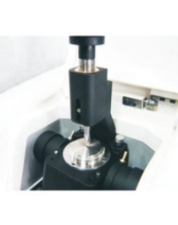
2) Single-reflection ATR Accessories:
① ZnSe crystal, 45° incidence angle
② Ge crystal, 45° incidence angle
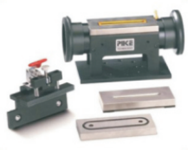
3) Thin Film Testing Accessories:
① Electric heating plate (temperature controllable)
② Silicon wafer (φ=25 mm)
③ Thin film holder: φ=25 mm
Sample Preparation
1) ATR Method: Most samples (raw materials, finished products) can be tested directly without preparation. For samples that are too thick or have an excessively large surface area, they can be trimmed into small, smooth slices before testing.
2) Thin Film Method: Heat the silicon wafer on the electric plate to near the sample's melting point (avoid smoking). Use tweezers to take an appropriate amount of the sample and gently smear it onto the heated silicon wafer to form a thin layer. Remove the wafer and let it cool to room temperature before testing.
Test conditions
1) Resolution: 4 cm⁻¹
2) Scan times: 32
3) Detector: Pyroelectric Infrared Detector
Examples of Test Results
|
Figure 1 ATR spectrum of PET sample |
|
Figure 2 ATR spectrum of PE sample |
|
Figure 3 ATR spectrum of PVC sample |
|
Figure 4 ATR spectrum of PP sample |
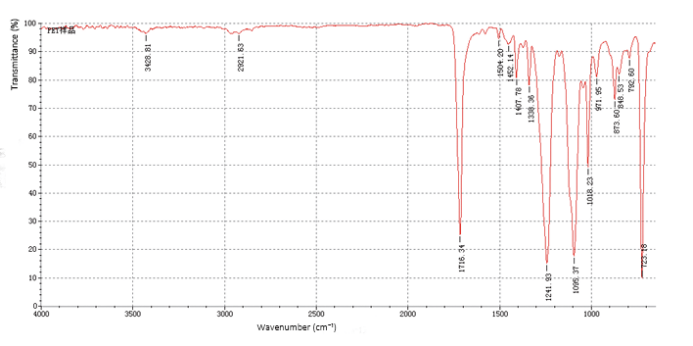
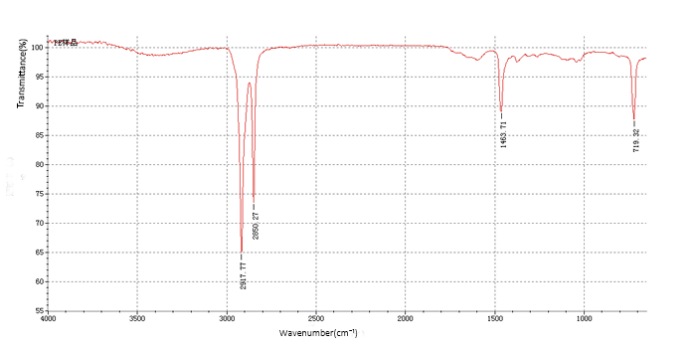
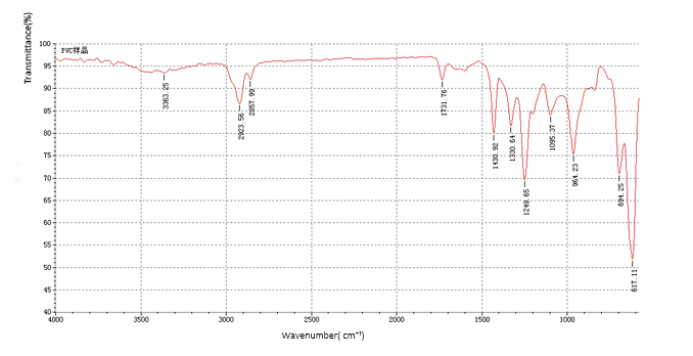
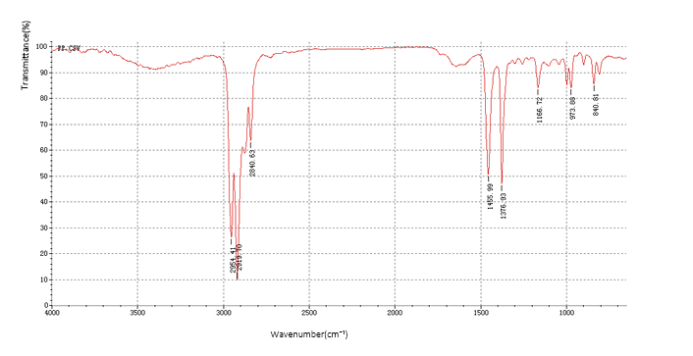
Note: The above spectra were obtained using a ZnSe crystal with a wavenumber range of 4000–650 cm⁻¹.
Other sample preparation methods (e.g., liquid film method, hot pressing method) have drawbacks such as the use of toxic/hazardous solvents, operational difficulties, and poor reproducibility, and are therefore not recommended.
Conclusion
ATR-FTIR is an excellent method for testing pharmaceutical packaging materials, as it requires no sample preparation and enables in-situ measurements, particularly offering significant advantages for interfacial thin-film analysis.
This technique, combined with ATR accessories, provides a simple, reliable, and ideal approach for the qualitative identification of pharmaceutical packaging materials.
Dedicated Accessories
|
|
|
|
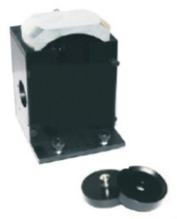
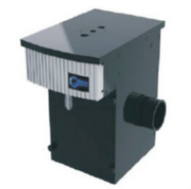
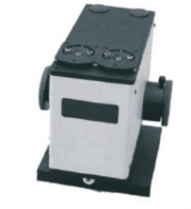
ATR Accessory | IRA-RS-D-650 Diffuse Reflectance Accessory | IRA-RD-N Gemstone Analysis Accessory | Infrared Fiber Optic Probe |
|
|
|
|
Horizontal ATR Accessory | IRA-GC-H1-G FTIR-TGA Hyphenated System | IRA-RS-A 77° Relative Reflectance Accessory | IRA-RS-F Focusing Transmission Accessory |
|
|
|
|
IRA-RS-P Collimated Beam Accessory | IRA-MC1 Infrared Microscope | HS-2 Secondary Hydroxyl Group Testing Accessory | HS-1 Internal carbon-oxygen unit Testing Accessory |