
In the rubber industry, rapid and accurate identification of raw materials and finished product components is crucial for ensuring product quality, optimizing formula development, and conducting failure analysis. The HKL-4650 Fourier Transform Infrared Spectrometer is specifically designed for this field, setting a new benchmark for rubber analysis and identification with its superior performance. This model strictly adheres to international standards and can efficiently perform qualitative and semi-quantitative analysis of rubber polymer types, organic additives (such as plasticizers, antioxidants, and vulcanizing agents), and inorganic fillers (such as carbon black and silica).
The core advantages of the HKL-4650 include:
Robust Optical Stability System: The instrument incorporates a unified optical bench with a fully molded structure, where key elements are permanently aligned during assembly. This design eliminates post-production calibration needs, dramatically enhances operational stability, and thoroughly resolves the maintenance challenges typical of conventional optical configurations.
High-Performance Electronic System: Equipped with the latest 24-bit A/D converter and a 500kHz A/D conversion speed, along with an imported high-sensitivity infrared detector, it achieves real-time spectral data acquisition, ensuring data accuracy and reliability. The latest USB 2.0 communication interface improves data transfer speed, allowing for sample testing in just a few seconds.
Practical Humidity Control System: With an airtight interferometer that provides immediate humidity status feedback, this design minimizes operator upkeep efforts. A distinct color-changing desiccant indicator warns users when replacement is needed—effectively preventing the most common operational issue in FTIR spectrometers. Desiccant replacement is conveniently performed without removing the instrument cover.
The integrated corner mirror molding process: Both the moving and fixed mirrors adopt integrally molded gold-plated corner mirrors, ensuring better light throughput and high reflectivity; the bonding-free design is unaffected by ambient temperature, providing the instrument with higher intrinsic stability.
Core components imported from developed countries in Europe and America: All critical parts—including the light source, detector, beam splitter, and die—are originally imported, guaranteeing premium quality.
The application of this FTIR spectrometer marks a new stage of standardization and intelligence in material analysis for the rubber industry. At the application level, it not only transforms traditional, complex chemical analysis into minute-level spectral identification, but also achieves standardized quality control throughout the entire process, from raw material inspection to failure analysis, thanks to its seamless integration with the ISO 4650 international standard. In terms of industrial significance, this spectrometer, through reliable technology and precise data support, improves the overall quality control level of the industry, helping rubber products establish lasting technical trust and compliance advantages in the global market.
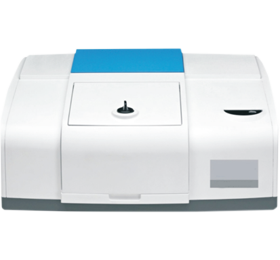
HKL-4650 FTIR Spectrometer for Rubber Analysis
About Hong Kong Laboratory Technology Limited
Since 2018, Hong Kong Laboratory Technology Limited has been a reliable partner in the instrumentation industry. We have created a strong network over the last eight years, assisting more than 500 clients by exclusively representing 50+ world-renowned brands. Leveraging our profound understanding of the industry, we offer an end-to-end supply chain service starting from Research and Development to the final production, all backed by a strict quality management system. We ensure our main instruments are developed based on the highest worldwide standards (ISO 9001, ASTM, IP) and are regularly calibrated according to ISO/IEC 17025 standards to maintain accuracy and dependability. Our dedication lies in supporting innovation and guaranteeing safety through our instruments for various sectors such as research centers, petrochemical and mining industries, healthcare institutions, and environmental bodies.