

Key Use Case Characteristics: Solid samples for Fourier Transform Infrared (FTIR) Spectrometer requiring no pre-processing. (Diamond, Zinc Selenide (ZnSe), and Germanium (Ge))
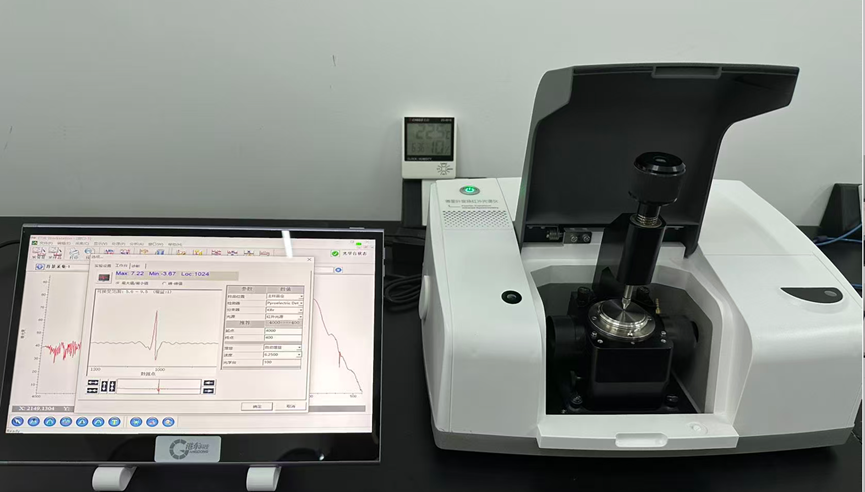
Polymers/Macromolecules: Plastic pellets, rubber, fibers, resin films, etc. No dissolution or film-casting via melting is required; the surface chemical structure can be analyzed directly.
Tablets/Powders: Direct measurement of active ingredients and excipient distribution on tablet surfaces, or non-destructive analysis of small powder samples by simply pressing them against the crystal.
Paper, Textiles, Wood Products, etc.: Analysis of surface coatings or chemical modification treatments applied to these materials.
Highly Absorptive Liquids and Gels/Pastes: Examples include jellies, toothpaste, medicinal ointments, etc.
Aqueous Solutions: ATR is an ideal method for analyzing aqueous solutions because the penetration depth of infrared light into the crystal is very shallow (on the micron scale), thereby significantly minimizing interference caused by water’s strong absorption. Commonly used for analyzing protein solutions, biochemical samples, water-based emulsions, etc.
Viscous Liquids: Such as lubricating oils, cooking oils, cosmetics (face creams, lotions), adhesives, etc.; these can be measured simply by applying them directly onto the crystal surface.
Surface Coating and Thin Film Analysis: Measurement of thin layers, coatings, contaminants, or adsorbed substances present on material surfaces. Highly sensitive to surface-specific information, making it a powerful tool for surface analysis. Examples: Analyzing anti-rust coatings on metal surfaces, thin-film coatings on glass, or surface contaminants and fingerprints on various materials.
Forensics and Cultural Heritage: Non-destructive analysis of trace amounts, precious items, or samples that must remain intact—such as single fibers, paint chips, inks, paper from antique texts, pigments, etc.
In summary, as a sampling accessory for Fourier Transform Infrared (FTIR) spectroscopy, ATR is primarily used to analyze samples—such as solids, liquids, pastes, gels, films, and coatings—that are difficult to analyze directly using the transmission method. Consequently,the ATR accessory significantly expands the scope of FTIR applications, establishing it as a powerful tool for the rapid, non-destructive, and in situ analysis of samples with complex physical forms across fields such as materials science, chemistry, pharmaceuticals, biology, food science, and forensics.