

Detection Target
Qualitative identification of adhesives
Overview
Adhesives typically constitute a multi-component system with complex formulations. The composition is divided into two parts: the substance that provides the fundamental bonding function is called the base material, while various additives are incorporated to meet diverse process and production requirements, thereby enhancing bonding effectiveness. Commonly used additives include curing agents, vulcanizing agents, vulcanization accelerators, anti-aging agents, plasticizers, toughening agents, diluents, tackifiers, fillers, etc.
The analysis of primary components in adhesives is a common task in physical evidence examination. Methods typically adopted include physical data analysis, chemical identification, elemental analysis, ultraviolet absorption spectroscopy, mass spectrometry, and nuclear magnetic resonance. Among these, infrared spectroscopy stands out as the most effective method, with numerous comprehensive articles and monographs published in this area. Therefore, we utilized Attenuated Total Reflection (ATR) infrared spectroscopy to analyze the primary components of several adhesives and achieved satisfactory results.
Principle
Fourier Transform Infrared Spectroscopy (FTIR) is an effective method for the qualitative identification of substances. By leveraging the distinct characteristic absorption peaks of different adhesives (glues) in the infrared spectrum, the primary components can be qualitatively analyzed.
Sample Preparation
The adhesive (glue) sample is cut into a suitable size (approximately 2 cm × 2 cm) and placed onto the ATR (Attenuated Total Reflection) accessory using a sample holder. A certain pressure is applied to ensure tight contact between the sample and the crystal before measurement.
Operating Conditions
Equipment and Accessories
1) HKL- FTIR Spectrometer for Adhesives Analysis
2) Single-reflection ATR accessory (45°, ZnSe crystal)
Test conditions
1) Resolution: 4 cm-1
2) Scan times: 32
3) Detector: Pyroelectric Infrared Detector
4) Spectral range: 4000–600 cm-1
Example of Testing Results:
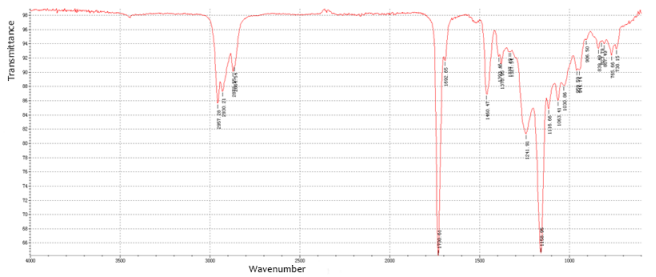 |
Figure 1 Acrylic-based adhesive |
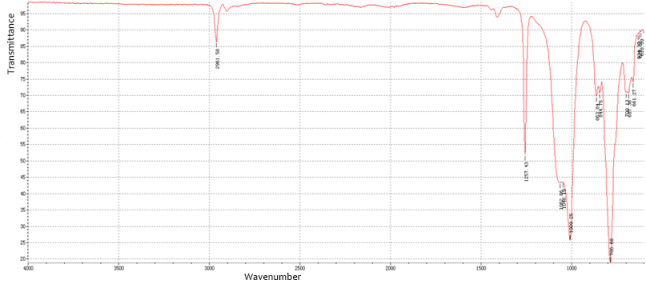 |
Figure 2 Silicone adhesive |
Conclusion
Attenuated Total Reflection (ATR) infrared spectroscopy enables the analysis of adhesives (glues) without sample preparation, allowing for in-situ measurements. The FTIR-ATR method provides a simple, reliable, and efficient approach for the qualitative identification of adhesive types, making it an ideal technique for adhesive characterization.