
Detection Target
Identification of commonly used adhesives and separator materials in lithium-ion batteries
Overview
Lithium batteries are a type of battery that uses lithium metal or lithium alloy as the anode material and non-aqueous electrolyte solutions. They offer advantages such as high specific energy, long service life, high nominal voltage, low self-discharge rate, lightweight, strong adaptability to high and low temperatures, and environmental friendliness. As a result, they have seen increasingly widespread applications and have become the most prominent type of battery today. Lithium batteries primarily consist of components such as the cathode, anode, separator, organic electrolyte, and casing.
In the research, development, production, and quality control of lithium batteries, qualitative analysis is required for materials such as binders, separator materials, organic electrolytes, and polymer materials used in the cathodes and anodes. Fourier Transform Infrared (FTIR) spectroscopy, leveraging the unique fingerprint infrared spectra of organic compounds, serves as an optimal method for the qualitative analysis of organic materials in lithium batteries.
Apparatus
HKL-FTIR Spectrometer for Lithium-ion Battery analysis
Application
Cathode: Qualitative/quantitative analysis of binders
Anode: Qualitative/quantitative analysis of binders
Separator material: Qualitative analysis
Other polymer materials: Qualitative analysis
Solution for analyzing lithium battery binders
1. Overview
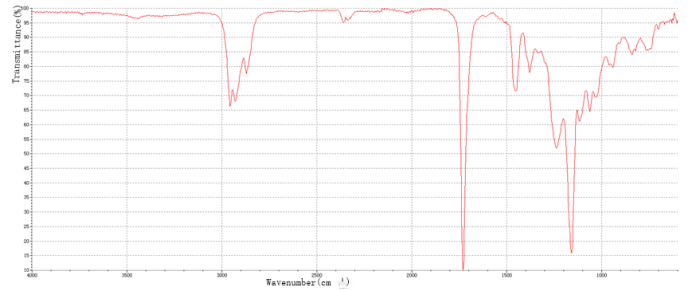
Common binders used in lithium-ion batteries primarily include polyvinyl alcohol (PVA), polytetrafluoroethylene (PTFE), polyolefins (PP, PE, and their copolymers), polyvinylidene fluoride (PVDF), as well as modified SBR rubber, fluorinated rubber, polyurethane, and others. As a critical component of lithium-ion battery electrodes, binders serve to ensure sufficient adhesion between active material particles and between the active material and current collectors during battery operation, while also facilitating the formation of the SEI (solid electrolyte interphase) layer.
The HKL-FTIR Spectrometer for Lithium-ion Battery analysis, equipped with an attenuated total reflection (ATR) accessory, provides an ideal solution for analyzing lithium battery binders. This method requires no sample preparation, is simple to perform, and delivers reliable results, making it an excellent choice for identifying binders used in lithium batteries.
2. Spectrum Example
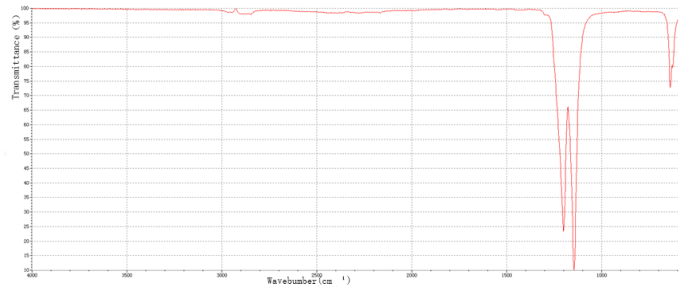 |
Polytetrafluoroethylene (PTFE) |
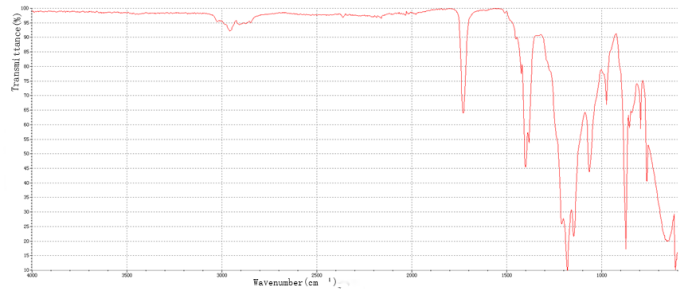 |
Polyvinylidene Fluoride (PVDF) |
|
Polyacrylate |
3. Analysis of lithium hexafluorophosphate
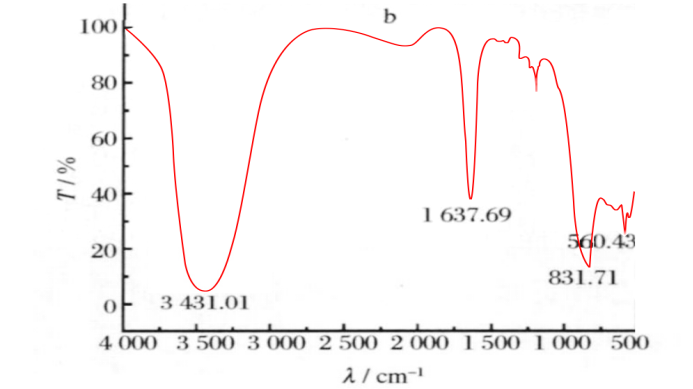
Lithium hexafluorophosphate (LiPF6) is a key component in the electrolyte of lithium-ion batteries. It exhibits appropriate solubility and high conductivity in various non-aqueous solvents; it can form a suitable solid electrolyte interface (SEI film) with solvents on the carbon anode; it effectively passivates the positive current collector to prevent its dissolution; it has a relatively wide electrochemical stability window and demonstrates relatively good environmental friendliness.
To determine its absorption peaks, the sample is uniformly dispersed by grinding with liquid paraffin, and the preparation is done by coating on a potassium bromide (KBr) crystal disk. The results are then compared with the reference spectrum of lithium hexafluorophosphate for identification.
Spectrum Example
Solution for analyzing lithium battery separator material
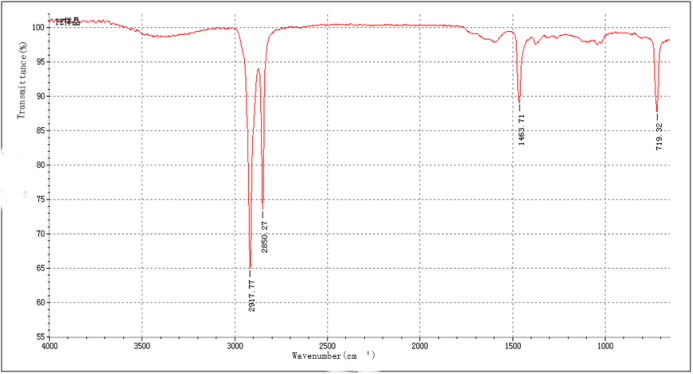
The separator material is a specially formed polymer film with a microporous structure that allows lithium ions to pass through freely while blocking electrons. Currently, lithium battery separators are primarily polyolefin separators (PP, PE, PP/PE/PP) manufactured using mechanical stretching pore-forming processes. As the best qualitative method for polymer characterization, infrared spectroscopy can be used for qualitative analysis of lithium battery separator materials.
Using HKL-FTIR Spectrometer for Lithium-ion Battery analysis equipped with an attenuated total reflectance (ATR) accessory, the lithium battery separator material can be tested directly.
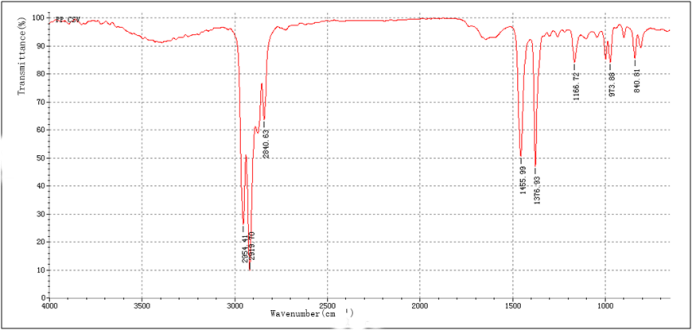 |
PP sample material |
|
PE sample material |