

Detection Target
Determination of Toxic Substances in Air – Copper and Its Compounds
Overview
This solution conforms to the ASTM D4185 Standard Practice for Measurement of Metals in Workplace Atmospheres by Flame Atomic Absorption Spectrophotometry Copper. Workplace air samples are collected on membrane filters and treated with nitric acid to destroy the organic matrix and to dissolve the metals present. The analysis is subsequently made by flame atomic absorption spectrophotometry (AAS).
Samples and standards are aspirated into an appropriate AAS flame. A hollow cathode or electrodeless discharge lamp for the metal being determined provides a source of characteristic radiation energy for that particular metal. The absorption of this characteristic energy by the atoms of interest in the flame is related to the concentration of the metal in the aspirated sample.
Introduction
Occupational Health Testing involves the measurement of toxic substances and other hazardous factors present in the workplace. Its fundamental tasks are to identify, evaluate, and control adverse working conditions and the resulting health risks to humans. Aimed at protecting workers' health, it establishes technical regulations for the hygienic conditions of the work environment, serves as the technical standard for implementing occupational health laws and regulations, and provides the legal basis for health supervision and management.
All enterprises are required to conduct occupational health testing to prevent employees from developing occupational diseases in the future. Therefore, occupational health testing is particularly crucial.
Principle
Aerosol-state copper and its compounds (including copper fumes and dust) in the air are collected using a microporous filter membrane. After acid digestion, the absorbance is measured at a wavelength of 324.7 nm using the spectrophotometer for quantitative analysis.
Instruments and Reagents
Reagent
1) Deionized water
2) Acids used: Guaranteed reagent
3) Digestion solution: A mixture of 1 volume perchloric acid (ρ₂₀ = 1.67 g/ml) and 9 volumes nitric acid (ρ₂₀ = 1.42 g/ml)
4) Nitric acid solution, 1% (v/v).
5) Standard solution: copper standard solution diluted with nitric acid solution to prepare a 10.0 μg/ml copper standard working solution.
Instrument
1) Membrane filter, 0.8-μm pore size.
2) Large cassettefilter holder, filter diameter: 37 mm or 40 mm.
3) Small cassettefilter holder, filter diameter: 25 mm.
4) Air sampler, flow rate range: 0–2 L/min and 0–10 L/min.
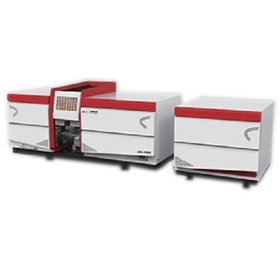
5) HKL-4185 AAS for Determination of toxic copper substances in workplace air, equipped with an acetylene-air flame burner and a copper hollow cathode lamp.
Sample Pretreatment
Place the sampled Membrane filter into a beaker, add 5 ml of digestion solution, and cover it with a watch glass. Digest on a temperature-controlled electric heater at approximately 200°C. Once the digestion solution has nearly evaporated, remove the beaker immediately. After cooling slightly, dissolve the residue with nitric acid solution, quantitatively transfer it into a stoppered graduated test tube, and dilute to 10.0 ml. The sample solution is then ready for measurement.
Preparation of the Calibration Curve
Take 5 to 8 beakers, add one Membrane filter to each, and then add 0.0 ml to 5.0 ml of the copper standard working solution, respectively. Add 5 ml of digestion solution to each beaker and follow the same sample pretreatment procedure. Dilute to a final volume of 10.0 ml to prepare a copper calibration series with a concentration range of 0.0 μg/ml to 5.0 μg/ml. Adjust the atomic absorption spectrophotometer to the optimal measurement conditions. Using the HKL-4185 AAS for Determination of toxic copper substances in workplace air, measure the absorbance of each concentration in the calibration series at a wavelength of 324.7 nm. Plot the calibration curve using the measured absorbance versus the corresponding copper concentration (μg/ml), or calculate the regression equation. The correlation coefficient (r) should be ≥0.999.
Sample Measurement
Under the same operating conditions used for the calibration series, measure the absorbance of the sample solution and the sample blank solution. Determine the copper concentration (μg/ml) in the sample solution using the calibration curve or regression equation. If the copper concentration in the sample exceeds the measurement range, dilute the sample with nitric acid solution and re-measure, then multiply by the dilution factor in the final calculation.
Calculation
Convert the sampling volume to the standard sampling volume. Calculate the concentration of copper in the air using the following formula:
C=10×C0/V0
Where:
C — Concentration of copper in the air, in milligrams per cubic meter (mg/m3)
10 — Volume of the sample solution, in milliliters (ml)
C0— Measured concentration of copper in the sample solution (after subtracting the blank), in micrograms per milliliter (μg/ml)
V0— Standard sampling volume, in liters (L).
Conclusion
The detection limit of the HKL-4185 AAS for Determination of toxic copper substances in workplace air is 0.002 μg/ml, which meets the requirements of this method.