
Detection Target
Analysis of Functional Groups in Gemstones and Jade
Overview
Currently, infrared spectroscopy technology is relatively widely applied in the identification and testing of gems and jades. This method requires shorter analysis time, exhibits relatively high specificity, and enables inspectors to conduct evidence-based examinations without damaging the samples.
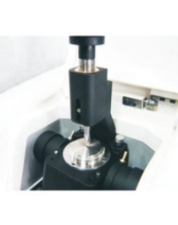
The application of the HKL- FTIR Spectrometer for Jewelry Testing with gemstone accessories for testing gem samples allows for the analysis of functional group information in gems and jades. Due to its high specificity, relatively short analysis time, minimal sample requirement compared to traditional identification methods, and non-destructive nature, the entire operational process becomes more efficient and convenient.
Principle
A beam of infrared light with varying wavelengths is first directed onto the gemstone molecules. The molecules absorb specific wavelengths of the infrared light, generating a corresponding infrared absorption spectrum for these particular molecules. Since different types of molecules exhibit distinct structural and compositional differences, the infrared absorption spectra they produce are also unique. By analyzing these spectra, it is possible to determine the molecular structure and identify the composition of the molecules.
Operating Conditions
Apparatus and Accessories
1) HKL- FTIR Spectrometer for Jewelry Testing
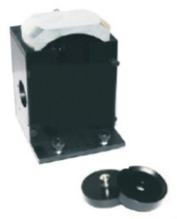
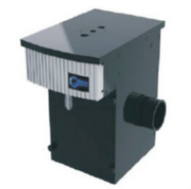
2) Gemstone-specific accessory (Reflection mode)
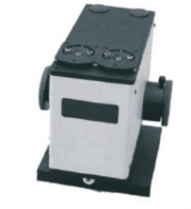
3) Micro-sample In-situ Transmission Accessory
Analysis Conditions
1) Resolution: 8 cm-1
2) Scan Times: 64
3) Scan Range: 4000–400 cm-1
Test Sample
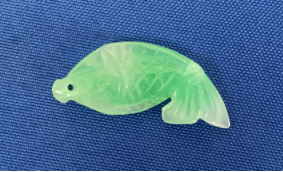 |
Fish Pendant |
Test Results
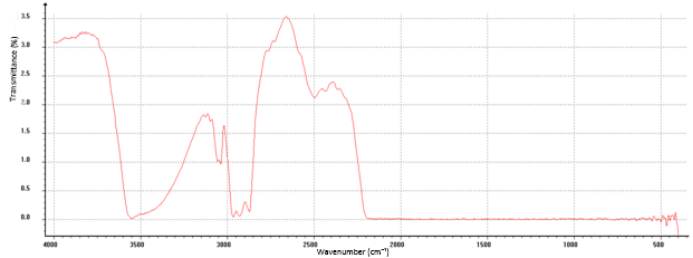
1. Transmission spectrum
|
Figure 1 Transmission IR spectrum of the fish pendant |
2. Reflection spectrum
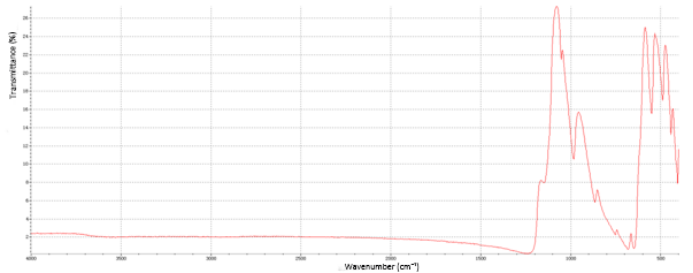 |
| Figure 2 Reflection IR spectrum of the fish pendant |
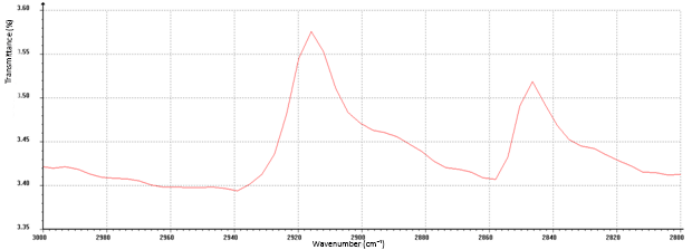 |
Figure 3: Reflection IR spectrum (resin-filled area) of the fish pendant |
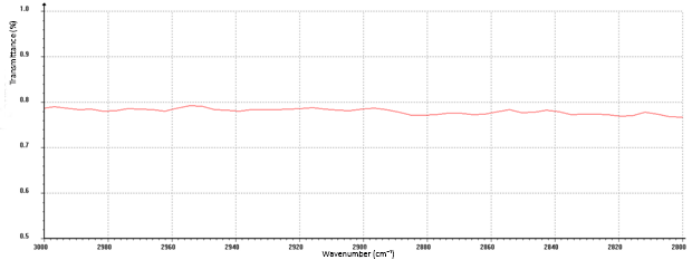 |
Figure 4: Reflection IR spectrum (non-resin-filled area) of the fish pendant |
3.Summary
From the spectra above, it can be observed that transmission testing does not reveal spectral differences in localized regions of the sample. However, when using the gemstone accessory (reflection method), the IR spectra of the resin-filled and non-resin-filled areas of the fish pendant exhibit distinct differences in the 3000–2800 cm-1 range.
Conclusion
Test results have demonstrated that infrared spectroscopy is a more efficient and accurate method for identifying gemstone materials such as jadeite and turquoise treated with polymer impregnation or filling (e.g., resin). Furthermore, this technique enables non-destructive testing.
Dedicated Accessories
|
|
|
|
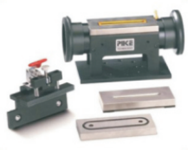
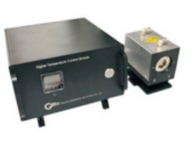
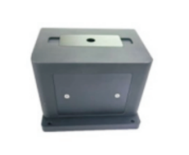
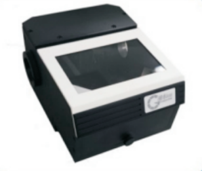
ATR Accessory | IRA-RS-D-650 Diffuse Reflectance Accessory | IRA-RD-N Gemstone Analysis Accessory | Infrared Fiber Optic Probe |
|
|
|
|
Horizontal ATR Accessory | IRA-GC-H1-G FTIR-TGA Hyphenated System | IRA-RS-A 77° Relative Reflectance Accessory | IRA-RS-F Focusing Transmission Accessory |
|
|
|
|
IRA-RS-P Collimated Beam Accessory | IRA-MC1 Infrared Microscope | HS-2 Secondary Hydroxyl Group Testing Accessory | HS-1 Internal carbon-oxygen unit Testing Accessory |