
Detection Target
Identification of Gemstones
Overview
Traditional gemstone identification primarily relies on the expertise of appraisers and utilizes non-destructive testing methods such as magnifiers, microscopes, refractometers, and hydrostatic balances. With the expanding application of infrared spectrometers and the rapid development of computer data processing technology, infrared spectroscopy has increasingly played a vital role in addressing challenges in gemstone testing and identification—particularly in resolving issues that conventional instruments struggle to analyze and often avoid. As a result, infrared spectrometers have gradually become an effective non-destructive tool for gemstone research and testing.
Principle
Infrared spectroscopy testing methods are generally divided into two categories: transmission infrared spectroscopy and reflection infrared spectroscopy.
The transmission method, is widely recognized and commonly used by gemological laboratories. However, gemstone samples are typically thick and strongly absorb infrared light, often allowing only partial detection of the mid-infrared region (above 4000–2000 cm⁻¹) and the near-infrared region. This method captures fundamental, combination, and overtone vibrations of functional groups such as O-H, N-H, and C-H—for example, detecting organic fillers in treated jadeite or water molecules in synthetic amethyst. Below 2000 cm⁻¹, however, infrared light is almost entirely absorbed, making it difficult to obtain useful spectral data. As a result, the spectral features obtained from transmission infrared spectroscopy often fail to represent the crystal or molecular structure of gemstone samples, providing only limited structural information and restricting further applications of infrared spectroscopy in gemology.
Reflection spectroscopy, which collects spectral data from reflected light, is an important branch of infrared spectroscopy and has gained increasing attention in gemstone testing and research. Depending on the type of reflected light used, diffuse reflectance spectroscopy (DRS) is the closest to transmission-based absorption spectroscopy and is typically effective for powdered or unpolished samples. However, diffuse reflectance signals are weak and challenging to collect, requiring more complex instrumentation. In contrast, specular reflectance infrared spectroscopy is the simplest to implement and is particularly well-suited for testing gemstone samples, making it a highly recommended technique for gemological applications.
Apparatus
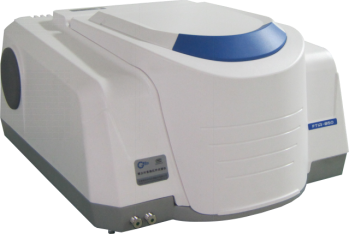
HKL- FTIR Spectrometer for Jewelry Testing
Configuration
Category | Name | Features | Number |
IR main unit | HKL- FTIR Spectrometer for Jewelry Testing
| For details, please click on the Apparatus. | 1 unit |
Software Specification | Software Workstation (Dedicated) | 1. English interface with spectrum annotation 2. Audit trail functionality 3. Data processing tools 4. Spectrum retrieval and comparison 5. Self-diagnostic function 6. Custom spectrum library addition 7. Spectrum matching analysis 8. Standard file format support 9. Lifetime free software upgrades | 1 unit |
Gemological Identification System (Optional) | 1. The Gemstone Infrared Spectroscopy Identification System is specifically developed based on reflection spectroscopy, while also incorporating specialized transmission spectra and select powder spectra (KBr tablet method). 2. This system typically requires no sample preparation and causes no damage to specimens, though a reflection accessory is necessary for operation. 3. The complete solution consists of two integrated components: a comprehensive gemstone infrared spectral database and retrieval software. | 1 unit | |
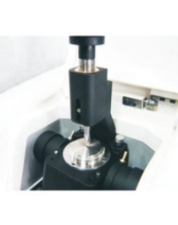
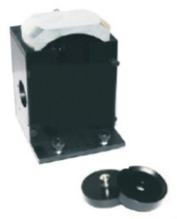
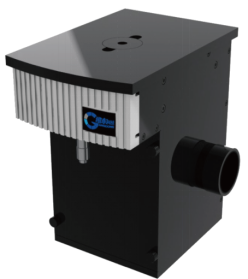
Testing Accessory | Gemological Analysis Attachment | The gemstone testing accessory is specifically designed based on specular reflection principles for measuring infrared spectra of various gemstones across different sizes and specifications. This attachment can be conveniently installed within the sample compartment of the HKL-FTIR-850. | 1 unit |
Solutions
1.Application: Suitable for the identification of gemstone composition, differentiation between natural and synthetic gemstones, and detection of artificially treated gemstones.
2.Test Conditions
|
|
HKL- FTIR Spectrometer for Jewelry Testing | Gem Identification Accessory (Reflectance Mode) |
3.Test Procedures
1) Remove the sample holder from the sample compartment and set it aside.
2) Install and secure the gemstone accessory into the sample compartment.
3) Select an appropriate aperture and place it on the platform of the gemstone accessory.
4) Place the high-reflectivity mirror facing downward onto the aperture.
5) Measure the air background spectrum.
6) Remove the high-reflectivity mirror.
7) Place the gemstone sample on the aperture.
8) Measure the infrared spectrum of the gemstone sample.
Dedicated Accessories
|
|
|
|
ATR Accessory | IRA-RS-D-650 Diffuse Reflectance Accessory | IRA-RD-N Gemstone Analysis Accessory | Infrared Fiber Optic Probe |
|
|
|
|
Horizontal ATR Accessory | IRA-GC-H1-G FTIR-TGA Hyphenated System | IRA-RS-A 77° Relative Reflectance Accessory | IRA-RS-F Focusing Transmission Accessory |
|
|
|
|
IRA-RS-P Collimated Beam Accessory | IRA-MC1 Infrared Microscope | HS-2 Secondary Hydroxyl Group Testing Accessory | HS-1 Internal carbon-oxygen unit Testing Accessory |