

Detection target
Determination of VOC content in printing inks
Introduction
The testing of volatile organic compound (VOC) content in printing inks is driven primarily by increasingly stringent requirements for environmental protection, occupational health and safety, and product quality compliance. VOCs are organic chemical substances that readily evaporate at room temperature and pressure, and printing inks (especially solvent-based inks) are one of their major sources of emission. During the printing process, the evaporation of VOCs not only causes indoor air pollution and endangers the respiratory health of operators, but also acts as a precursor to photochemical smog and fine particulate matter (PM2.5), posing a threat to the atmospheric environment.
Therefore, testing the VOC content of printing inks has become an essential part of production process control, final product certification, and meeting market access requirements, aiming to promote green printing and the application and development of low-VOC/water-based inks.
Overview
This solution conforms to the ISO 11890 Paints and varnishes - Determination of volatile organic compound (VOC) and/or semi-volatile organic compound (SVOC) content-Part 2: Gas-chromatographic method. After sample preparation, separation was performed using gas chromatography. Following compound identification, quantification was carried out using an internal standard and a gas chromatograph-flame ionization detector, based on the peak area and the compound's specific relative response value. Unidentified substances were quantified using a surrogate standard (which could be the same as the internal standard). The content of volatile organic compounds and/or semi-volatile organic compounds in the sample was then calculated.
Apparatus
HKL-11890 Gas Chromatograph for Ink VOCs
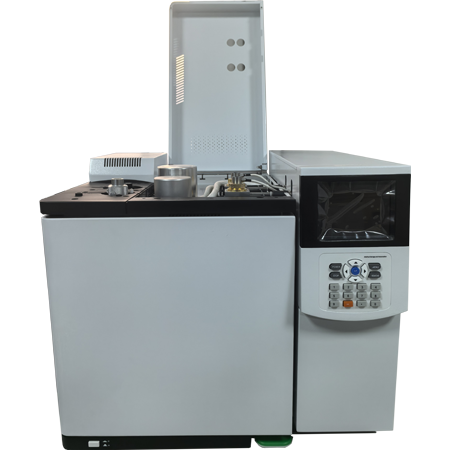
Configuration
Serial | Name | Specification | Number |
1 | Gas Chromatograph | HKL-11890 | 1 set |
2 | Chromatographic column | 1 pc | |
3 | Standard Sample | 1 set | |
4 | Workstation | Data acquisition. | 1set |
5 | Air Generator | 1) Air purity: Oil-free, triple-filtered 2) Output flow: 0–3 L/min 3) Input pressure: 0–0.4MPa (adjustable) 4)Rated power: 150 W | 1 set |
6 | Hydrogen Generator | 1) Hydrogen purity: 99.999% 2) Output flow: 0–300 ml/min 3) Input pressure: 0–0.4 Mpa 4)Rated power: <150 W | 1 set |
7 | Nitrogen Cylinder | Purity: 99.999%; includes cylinder + pressure regulator | User provided |
8 | Computer + Printer | User provided |