

Detection target
Measurement of indoor environmental pollutants
Introduction
Indoor environmental pollution refers to the comprehensive health and comfort risks caused by pollutant concentrations exceeding safe limits in residential buildings, offices, schools, and other indoor environments. Pollution sources are diverse and mainly include: chemical pollutants (such as formaldehyde and benzene-based volatile organic compounds released from building materials, VOCs in cleaning agents and perfumes, and combustion products such as PM2.5 and carbon monoxide).
These pollutants can enter the human body through respiration, skin contact, and other routes. Short-term exposure may cause eye and nasal irritation and headaches, while long-term exposure is closely associated with chronic respiratory diseases, allergies, neurotoxicity, and an increased risk of cancer. With the increasing trend towards energy-efficient and airtight modern buildings, and the widespread use of synthetic materials and chemicals, indoor pollution has become a core issue in global public health and environmental protection.
Overview
This solution conforms to the ISO 16000-6 Indoor air —Part 6: Determination of organic compounds (VVOC, VOC, SVOC) in indoor and test chamber air by active sampling on sorbent tubes, thermal desorption and gas chromatography using MS or MS FID. A certain amount of air sample is collected from the indoor air and drawn through one (or more) adsorbent tubes. The compounds retained by these adsorbent tubes are then analyzed. The collected compounds are desorbed by heating and subsequently transferred to a gas chromatograph equipped with a capillary column for detection and analysis.
Apparatus
HKL-16000 Gas Chromatograph for Indoor Pollution Control
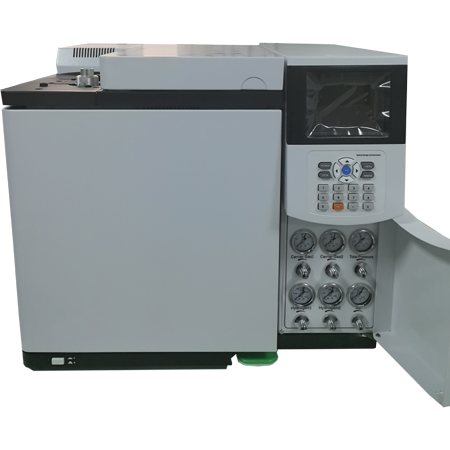
Configuration
Serial | Name | Specification | Number |
1 | Gas Chromatograph | 1) HKL-16000 2) 10.2-inch color touch screen; 8-channel temperature control and 8 external events; digital display of all gas flow rates on screen (no analog pressure gauges required); temperature and detector parameters fully controllable; signal output via Ethernet; real-time chromatogram display on screen; FID and FPD auto-ignition; temperature programming: 8 stages (expandable to unlimited stages via programming); logarithmic amplifier (no solvent peak saturation); split/splitless capillary inlet system with backpressure valve for stable column head pressure. | 1 set |
2 | Chromatography Column | 1 pc | |
3 | Standard Sample | 1 set | |
4 | workstation | 1 set | |
5 | Thermal Desorber | 1 set | |
6 | Air Sampler | 1 set | |
| T-C Composite Sampling Tube | 5 pcs | |
8 | Air Generator | 1) Air purity: Oil-free, triple filtration 2) Output flow: 0-3 L/min 3) Input pressure: 0-0.4MPa (adjustable) | 1 set |
9 | High-Purity Hydrogen Generator | 1) Hydrogen purity: 99.999% 2) Output flow: 0-300 ml/min | 1 set |
10 | Nitrogen cylinder | Includes pressure regulator | User-provided |
11 | Computer + printer | User-provided |