
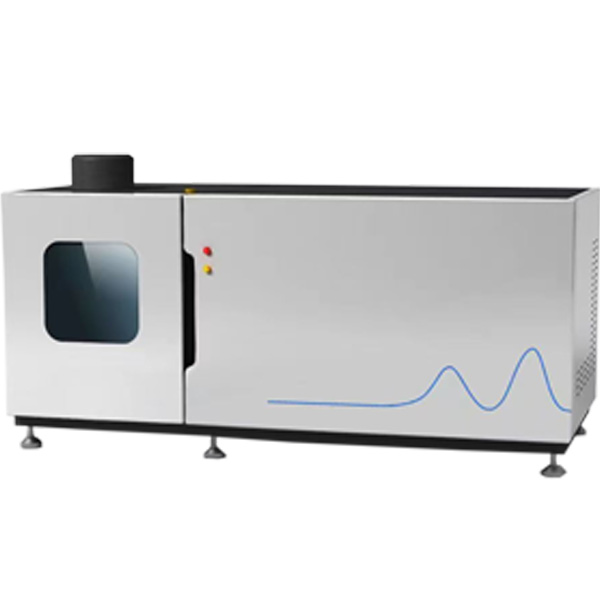
HKL-17650 ICP for Determination of metallic element content in steel
Overview
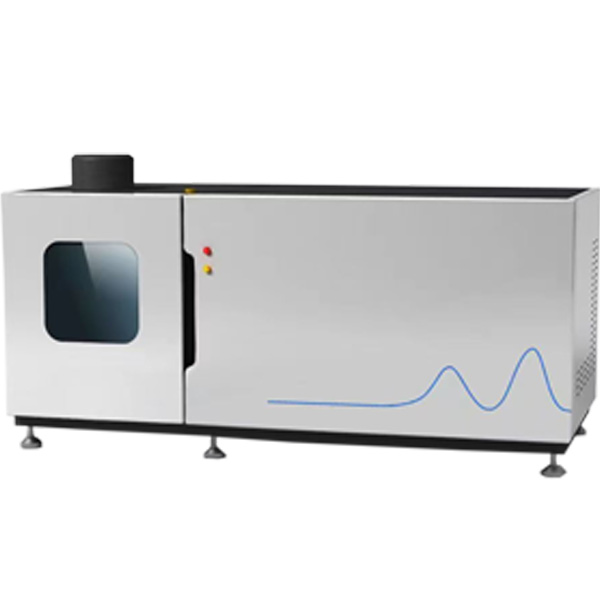
HKL-17650 ICP for Determination of metallic element content in steel conforms to the ISO 17650 Low-alloyed steel—Determination of Mn, P, Cr, Ni, Mo, Co, Cu, V, Ti, As and Sn—Inductively coupled plasma optical emission spectrometric method. This standard specifies a method for the determination of Mn, P, Cr, Ni, Mo, Co, Cu, V, Ti, As and Sn contents in low alloyed steel by inductively coupled plasma optical emission spectrometry(ICP-OES).
Features
1. Automatic Protection for Upset Situations in Water, Power, and Gas Supply: The flame monitoring function adopts a fiber-optic sensor to identify the light intensity of the flame; in case the flame goes out, this function immediately switches off the power supply, so it essentially operates as a safeguarding feature for the electrical system.

2. Excellent Spectral Resolution: The instrument boasts an extremely high resolution capable of going as low as 0.005 nm (usually around 0.008 nm). The smaller the resolution number, the better the resolving power. Consequently, it results in narrower peaks, which in turn leads to fewer measurement errors even in samples with complex matrices, where interferences between spectra occur.
3. Using patented torch tooling, our sample introduction system can lock the torch and coil in perfect concentric alignment in roughly one second, thus doing away with the requirement for manual fine-tuning. To further enhance the setting up, along with the latter accuracy of the parts position, an improved fastening mechanism completely changes the traditional snap-lock design.
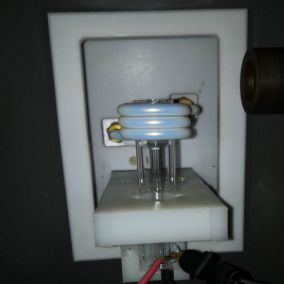
4. Simply the best high-efficiency and high-sensitivity concentric nebulizer - Imported.
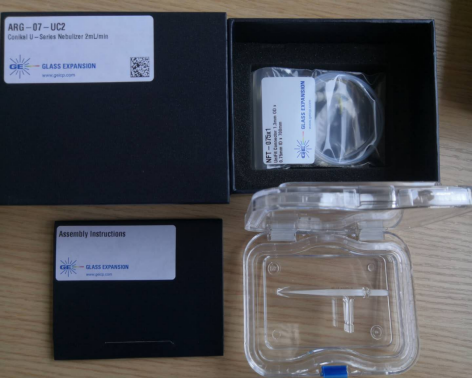
5. Description of Major Instrument Components
The nebulizer is sourced from GE (Australia) |
The ion-etched holographic grating is sourced from Newport (USA) |
The detector features a high-performance detection chamber from Hamamatsu (Japan) |
Two DC motors are imported from the USA |
Two vacuum capacitors are imported from the USA |
The drive unit is imported from the USA |
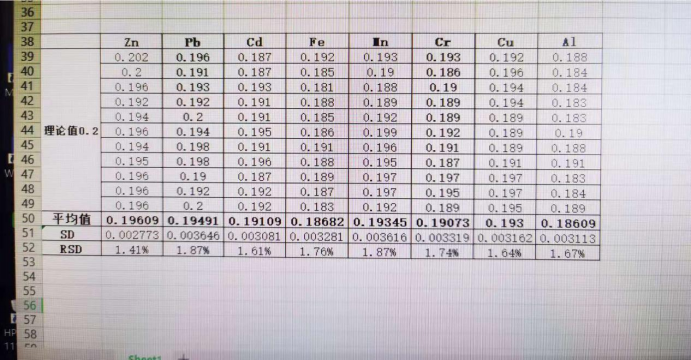
6. ICP Key Metric: RSD—Back-tested Data Following On-site Calibration Curve Generation
Technical Parameters
Solid-State Power Supply
1)Circuit Type: Inductive feedback self-oscillating circuit, coaxial cable output, matching tuning, closed-loop automatic power control
2)Operating Frequency: 27.15 MHz ± 0.02%
3)Frequency Stability: <0.05%
4)Output Power: 800 W – 1200 W
5)Output Power Stability: < 0.25%
6)Electromagnetic Leakage Radiation Intensity: Electric field strength (E) < 2 V/m at a distance of 30 cm from the chassis.
Argon Flowmeter and Carrier Gas Pressure
1)Plasma Gas Flow Rate: 100–1000 L/h (1.67–16.7 L/min)
2)Carrier Gas Regulator:0–0.4 Mpa
3)Cooling Circulating Water: Temperature: 20–25°C, Flow Rate: 5 L/min, Pressure: 0.1 MPa
Monochromator
1)Optical Path: Czerny-Turner
2)Focal Length: 1000 mm
3)Grating Specifications: Ion-etched holographic grating; groove density: 2400 lines/mm
4)Reciprocal Linear Dispersion: 0.25 nm/mm
5)Resolution: ≤ 0.012 nm (2400 lines)
6)Scanning Wavelength Range: 2400 lines/mm: 190–800 nm
7)Minimum Step Size (Stepping Motor Drive): 0.0005 nm
8)Exit Slit: 14 μm
9) Entrance Slit: 8 μm
Photoelectric Converter
1)Photomultiplier Tube (PMT): R293 or R298
2)Photomultiplier Tube Negative High Voltage: 0–999 V; Stability <0.08%
Whole Machine
1)Wavelength Scanning Range: 195–800 nm (2400 lines/mm grating)
2)Repeatability (RSD): ≤1.6%
3)Stability (RSD):≤1.87%
Detection Limit
Element | Wavelength | Detection Limit | Element | Wavelength | Detection Limit |
Tm | 313.126 | ≤2.9 | Ba | 455.403 | ≤1.0 |
Mg | 279.553 | ≤1.1 | Sn | 242.949 | ≤19.5 |
Pr | 414.311 | ≤4.8 | Zr | 343.823 | ≤4.5 |
Fe | 239.562 | ≤3.0 | Sr | 407.771 | ≤1.0 |
Eu | 381.967 | ≤1.0 | Au | 242.795 | ≤4.6 |
Gd | 342.247 | ≤10.0 | Pt | 265.945 | ≤4.6 |
Ca | 393.366 | ≤0.8 | Pd | 340.458 | ≤4.5 |
Er | 337.271 | ≤3.0 | Ru | 240.272 | ≤5.0 |
Zn | 213.856 | 2.9 | As | 228.812 | ≤13 |
Lu | 261.541 | ≤2.5 | Sb | 206.833 | ≤12 |
Y | 371.030 | ≤0.9 | Bi | 223.061 | ≤8 |
Sc | 335.373 | ≤0.7 | Hg | 253.652 | ≤13 |
Ta | 226.230 | ≤4.8 | Pb | 220.353 | ≤14 |
Nb | 313.340 | ≤4.7 | Ga | 294.364 | ≤10 |
Mn | 257.610 | ≤3.0 | Se | 203.985 | ≤9 |
Nd | 401.225 | ≤5.05 | Ag | 328.068 | ≤2.5 |
B | 249.773 | ≤10.1 | Te | 214.281 | ≤8..5 |
Ti | 334.941 | ≤2.7 | K | 766.490 | ≤55 |
Si | 251.611 | ≤10.0 | Tl | 276.787 | ≤28 |
Ni | 232.003 | ≤5.0 | Re | 227.525 | ≤5.0 |
Cd | 226.502 | ≤2.8 | Ge | 209.426 | ≤14.5 |
Mo | 281.615 | ≤4.9 | Cu | 324.754 | ≤2.85 |
V | 310.230 | ≤4.9 | Li | 670.784 | ≤3 |
Be | 313.041 | ≤1.0 | Na | 588.995 | ≤19 |
FAQ
Q1: What is the standard that this product, i.e. HKL-17650 ICP for Determination of metallic element content in steel, complies with?
A: HKL-17650 ICP for Determination of metallic element content in steel conforms to the ISO 17650 Low-alloyed steel—Determination of Mn, P, Cr, Ni, Mo, Co, Cu, V, Ti, As and Sn—Inductively coupled plasma optical emission spectrometric method. This standard specifies a method for the determination of Mn, P, Cr, Ni, Mo, Co, Cu, V, Ti, As and Sn contents in low alloyed steel by inductively coupled plasma optical emission spectrometry(ICP-OES).
Q2: What is the working principle of HKL-17650 ICP for Determination of metallic element content in steel?
A: Dissolution of a test portion in nitric and hydrochloric acids. Filtration and ignition of the acid insoluble residue. Removal of silica with hydrofluoric acid. Fusion of the residue with potassium hydrogen sulfate, dissolution of the melt with acid and addition of this solution to the reserved filtrate. If necessary, addition of an internal standard element and dilution of the solution to a known volume. Nebulization of the solution into an ICP-OES spectrometer and measurement of the intensity of the emitted light from each element simultaneously with the intensity of the light emitted by the internal standard element.
Q3: I am unsure which instrument suits my testing/production needs. Can you provide selection assistance?
A: Of course. Our technical team will be able to give you expert advice on the choice of equipment that best meets your application needs - for example sample types, detection accuracy, and budget. Please click the Online Consultation button on the right side of the page or complete our requirements form, and we will contact you promptly.
Q4: What industries are your equipments used in?
A: The laboratory testers and instruments we have produced are now an essential part of the testing capabilities for our customers in the food industry, petrochemical, mining, medical device testing, agriculture, and environmental protection. This level of quality has been recognized by a wide range of market players who trust us highly.
Q5: How do I obtain a price quote for a product?
A: Submit your requests through our contact page on the official website or customer service email and we will reach out to you within 24 hours with a detailed quotation.

About us
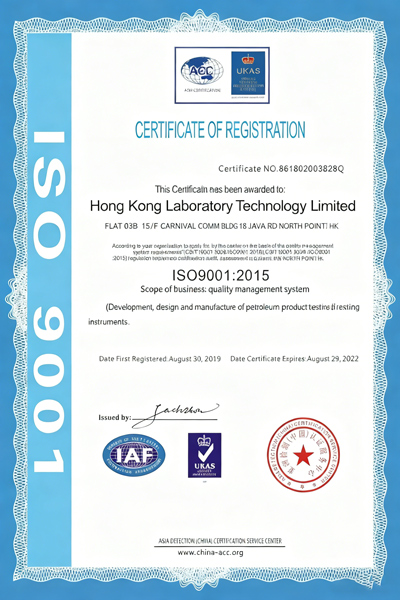
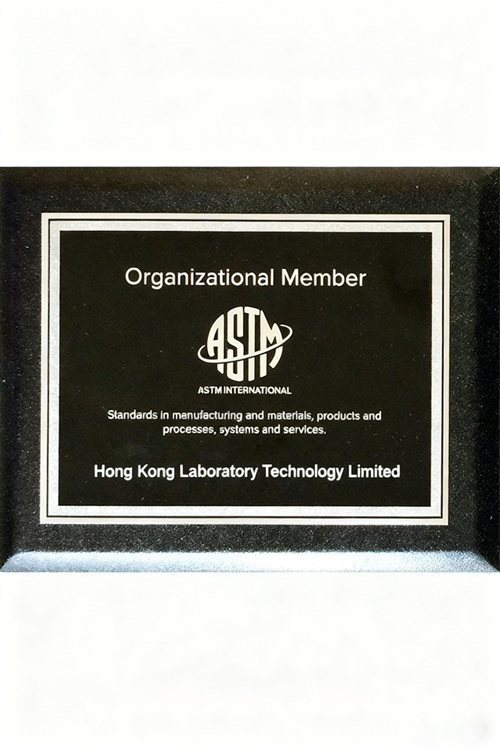
Hong Kong Laboratory Technology Limited specializes in supply chain integration and full-chain technical services for laboratory instruments. With years of industry expertise, our company operates under a stringent quality management system, complying with multiple international standards including ISO 9001, ASTM, and IP requirements. The core products not only comply with the ISO/IEC 17025 instrument calibration and testing standards, but are also widely used in research institutions, petrochemical andmining industries, medical institutions,and environmental protection departments. This high-standard quality has earned broad market and customer trust.
Company Advantages
(1)Full-Chain Resource Integration Capability
(2)Professional Technical Service Team
(3)Rich Industry Practical Cases
(4)Reliable After-Sales Service
Service Guarantee
1. Online Training Services
IIf you need help, we are ready to offer you online installation and commissioning services. Also, we can fully train you in the operation of the equipment. Besides these, we provide 24/7 online training support for end users during the whole year.
2. Professional After-Sales Service
Through maintenance services, we can support you in using your instruments in the ways they are meant to be used. To be really good at our job and to help us keep making it better, you should tell us what you like, what you don't and what you want to see to us making our quality better. Therefore, please feel free to send us your feedback.
Logistics and Shipping
Worldwide Shipping: It's what we've been doing for more than a decade, our experience in shipping goods to Asia, Europe, the Middle East, and other regions is extensive.
Secure Packaging:Laboratory instruments are carefully wrapped to make sure that they are safe and secured during shipment.
International Certification
|
|
ISO 9001 Certification | ASTM Certificate |