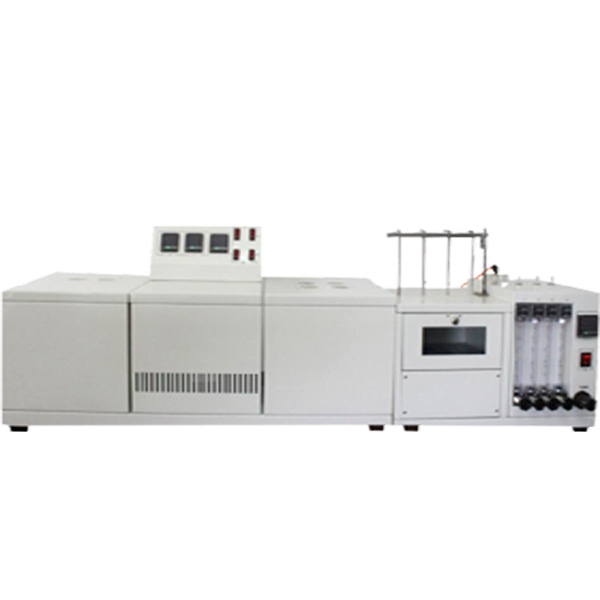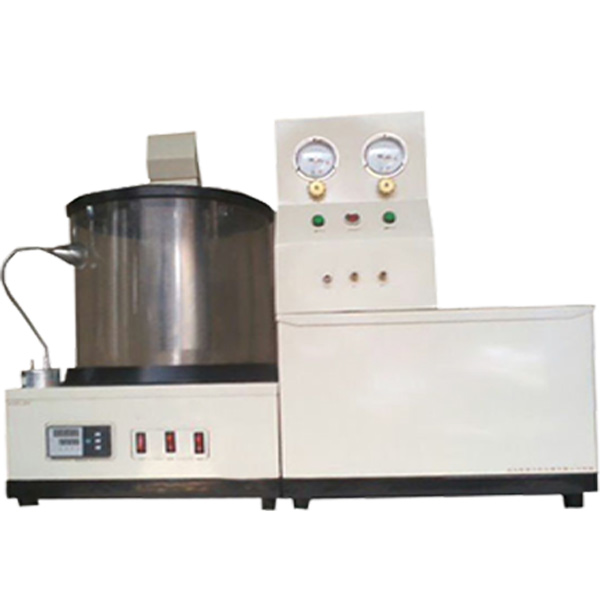

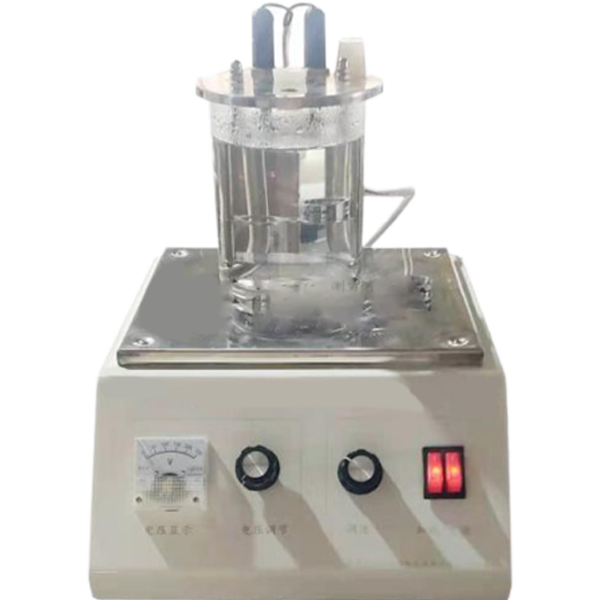
HKL-36 Apparatus for Softening Point of Asphalt
Overview
The HKL-36 Apparatus for Softening Point of Asphalt conforms to the ASTM D36 Standard Test Method for Softening Point of Bitumen (Ring-and-Ball Apparatus). The apparatus describes the method to find the softening point of bitumen with a ring-and-ball apparatus in the range of 30 to160 °C [86 to 320°F]. The method involves immersing the sample in distilled water [30 to 80°C] or USP glycerin (above 80 to 160°C).
Bitumens are viscoelastic materials without sharply defined melting points; they gradually become softer and less viscous as the temperature rises. For this reason, softening points must be determined by an arbitrary and closely defined method if results are to be reproducible.
Features
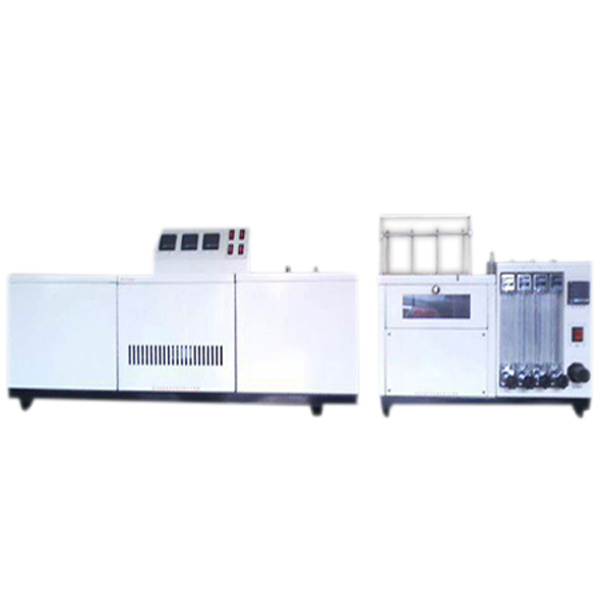
The constant temperature water bath is basically made of two parts: the electrical control box and the working box. The electrical control box is the one that is fitted with a digital temperature controller and control switches. On the other hand, the working box is the one that houses the main components like the compressor and cooling fan.
The instrument uses an integrated structure and has a special design that makes the maintenance very simple.
The temperature controller is the main component that controls this product. The device employs a digital PID temperature controller for precise temperature control. Indeed, the temperature control accuracy is kept to ±0.1°C. The temperature of the water bath is sensed by a PT100 sensor (which is a resistance temperature detector) and then conveyed to the temperature controller. Once the temperature controller receives the temperature signal, it internally computes and generates a control signal to perform heating control, thereby creating a closed-loop control system for very precise temperature regulation.
This instrument is equipped with a compressor-type refrigeration system, so there is no need for circulating cooling water. It has a condenser for discharging heat, which cools the instrument down very fast when it is powered on. The temperature control actuator uses a low-power solenoid valve that provides very sensitive response and at the same time has a long working life. So you can rest assured that all the energy saving and environmental protection requirements are fully met.
This instrument requires a 220V power source and is operated through a solid-state relay switch. Solid-state relays are contactless and do not spark, thus they are safe and avoid disturbing other electronic devices. Besides that, solid-state relays are compact, lightweight, and highly stable and reliable.
Technical Parameters
Model: HKL-36
Temperature Control Method: Digital PID temperature control
Temperature Control Range: Ambient temperature to 5°C
Temperature Control Accuracy: ±0.1°C
Temperature Control Component: Solenoid valve control
Refrigeration Method: Compressor refrigeration
Capacity: 20L
Power Rating: 0.65 kW
Power Supply: AC 220V ±10%, 50Hz
Operation Conditions: This testing instrument can operate normally under the following environmental and working conditions
Ambient Temperature: 5°C to 80°C
Relative Humidity: 45% to 80%
Atmospheric Pressure: 80 kPa to 106 kPa
Well-ventilated indoor environment, free from significant dust, corrosive gases, and noticeable vibrations.
Power Supply Requirements: Single-phase AC power, Rated Voltage: 220V ±10%, Frequency: 50Hz, Current: ≥8A
Note: The instrument’s power supply must be properly grounded.
FAQ
Q1: What standards does this product (HKL-36 Apparatus for Softening Point of Asphalt) comply with?
A: The HKL-36 Apparatus for Softening Point of Asphalt conforms to the ASTM D36 Standard Test Method for Softening Point of Bitumen (Ring-and-Ball Apparatus). This test method covers the determination of the softening point of bitumen in the range from 30 to 157°C [86 to 315°F] using the ring-and-ball apparatus immersed in distilled water [30 to 80°C] or USP glycerin (above 80 to 157°C).
Q2: The working principle of HKL-36 Apparatus for Softening Point of Asphalt?
A: Bitumen in the form of two horizontal disks, contained within brass rings that have shoulders, is heated gradually in a liquid bath. Each disk simultaneously holds a steel ball. The softening point of the bitumen is given as the average temperature of two disks at the time the steel balls which are covered with bitumen, fall down 25 mm due to softening of the disks.
Q3: Significance and use of HKL-36 Apparatus for Softening Point of Asphalt?
A: Bitumens are viscoelastic substances that do not have clearly defined melting points; instead, they progressively become softer and less viscous when heated. Therefore, the softening points should be measured by a strictly defined and arbitrary procedure to ensure that the results can be reproduced. The softening point is a handy parameter for the classification of bitumens, as it can be used to verify the consistency of shipments or sources of supply, and it suggests the propensity of the material to flow when exposed to high temperatures in service.
Q4: How can I obtain the user manual and technical documentation for the products?
A: We provide electronic formats of product manuals, quick operation guides, application cases, and standard operating procedures (SOPs). You may access them by logging into the download center on our website or by asking customer service to send you the files.
Q5: What is the minimum order quantity? How long is the delivery lead time?
A: Minimum order quantity is just one unit, and delivery will be around 20 days after we receive advance payment.

About us
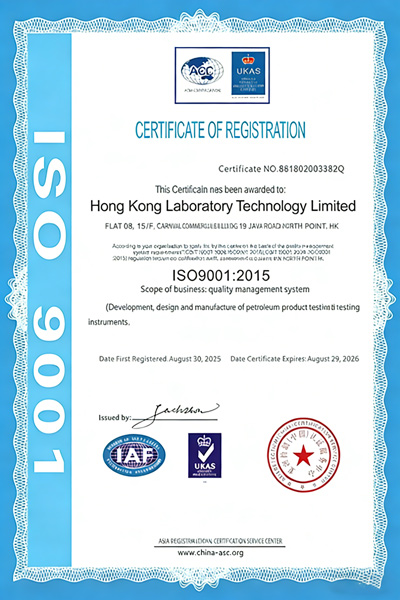
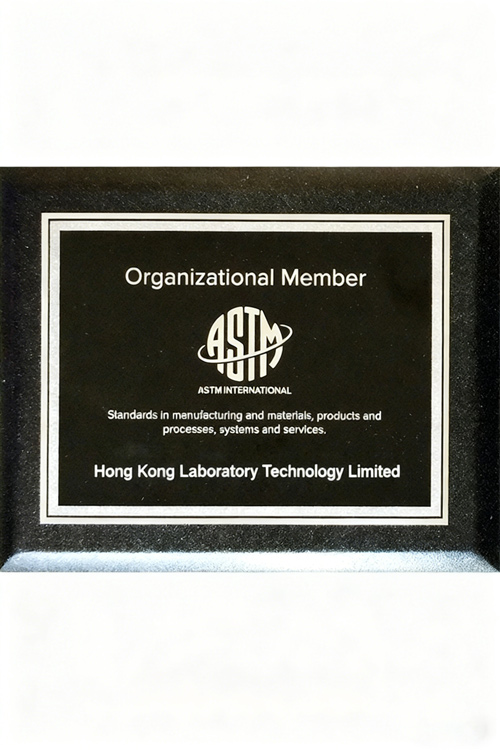
Since 2018, Hong Kong Laboratory Technology Limited has been the go-to company for the instrumentation industry. We have gradually developed a strong network in these eight years and have had the privilege of serving up to 500 customers who are spread through the exclusive authorization of more than 50 major international brands. Our profound understanding of the industry enables us to carry out the supply chain service that goes from Research and Development to end production, backed by an effective quality management system. The main devices we develop are made to comply with the worldwide standards (ISO 9001, ASTM, IP) and calibrated to ISO/IEC 17025 standards, which makes them accurate and reliable. We strive to deliver innovation and safety verification for educational bodies, petrochemical and mining sectors, health-related organizations, and environmental bodies.
Company Advantages
(1)Full-Chain Resource Integration Capability
(2)Professional Technical Service Team
(3)Rich Industry Practical Cases
(4)Reliable After-Sales Service
Service Guarantee
1. Online Training Services
We can provide online installation and debugging services if necessary, and comprehensive training on operation. Plus, we keep a 24/7 online training support line open for end users all year round.
2. Professional After-Sales Service
With the different kinds of instruments we support, we do offer expert repair services. Our objective at the end of the day is to be the best quality and have the most reliable instrument supplier in the market. We would appreciate your precious comments and suggestions in order that we may keep on improving our quality of service.
Logistics and Shipping
Worldwide Shipping: Our robust logistics infrastructure covers Asia, Europe, the Middle East and other parts of the world and that is enabling us to deliver efficient and highly reliable international shipping services to you.
Secure Packaging: Packing laboratory instruments requires extreme care and precision so that these instruments are properly secured and well protected from any mishap or damage during transportation.
International Certification
|
|
ISO 9001 Certification | ASTM Certificate |