

Detection Target
Determination of Structural Family Composition of Mineral Insulating Oils and Lubricating Oils
Overview
This solution conforms to the ASTM D2140 Standard Practice for Calculating Carbon-Type Composition of Insulating Oils of Petroleum Origin. This practice is useful for determining the carbon-type composition of Mineral insulating oil and lubricating oil. It is primarily intended for use with new oils, either inhibited or uninhibited. The primary purpose of this practice is to characterize the carbon-type composition of an oil. It is also applicable in observing the effect on oil constitution, of various refining processes such as hydrotreating, solvent extraction, and so forth. It has secondary application in relating the chemical nature of an oil to other phenomena that have been demonstrated to be related to oil composition.
Principle
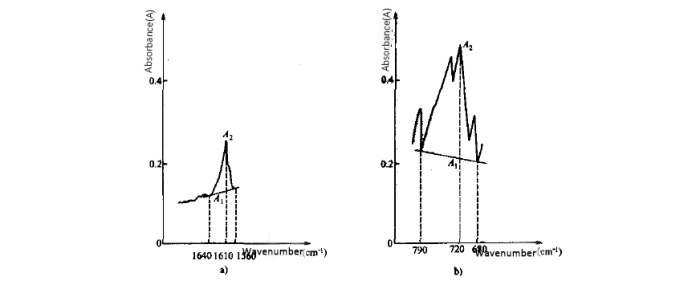
In mineral insulating oils and lubricating oils, aromatic carbons exhibit characteristic absorption at 1610 cm-1 in the infrared spectrum, while paraffinic chains show characteristic absorption at 720 cm-1. By substituting the measured absorbance values into empirical formulas, the structural group composition of the oils can be calculated, including the content of aromatic carbons (CA%), paraffinic carbons (CP%), and naphthenic carbons (CN%).
Operating Conditions
Instruments and Accessories
1) HKL-2140 FTIR Spectrometer for Structural Group Composition
2) Hydroxyl Test Attachment (Hydroxyl Test Holder)
Test Parameters
1) Resolution: 4 cm-1
2) Scan times: 32
3) Detector: Pyroelectric Infrared Detector
Others
Tetrachloroethylene (C2Cl4): Analytical Reagent (A.R.) Grade
Liquid Cell Path Length Determinatio
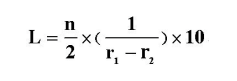
The empty fixed liquid cell is placed in the optical path and scanned (scan range: 1900 cm-1 to 600 cm-1) to obtain interference fringes containing maxima and minima. The path length of the fixed liquid cell is then calculated using the following formula:
Sample Measurement
Carefully inject the oil sample into the liquid cell using a glass syringe (ensure there are no large or small bubbles in the cell. Otherwise, repeat the injection). Place the liquid cell in the optical path and perform the scan.
Adjust the baseline of the scanned spectrum as follows, and record the absorbance of the sample at 1610 cm-1 and 720 cm-1.
Substitute the absorbance values obtained in step 2 into the empirical formula to determine the aromatic carbon (CA%), paraffinic carbon (CP%), and naphthenic carbon (CN%) content.
The table below lists the test results for the aromatic carbon content of several samples:
Aromatic Carbon Content (CA%) | ||||
1 | 1 | 1 | 1 | |
1 | 5.59 | 5.59 | 5.58 | 5.586 |
2 | 5.66 | 5.66 | 5.67 | 5.633 |
3 | 5.49 | 5.48 | 5.49 | 5.486 |
4 | 5.45 | 5.46 | 5.45 | 5.453 |
Conclusion
By using infrared spectroscopy to determine the structural group composition of mineral insulating oils and lubricating oils, combined with the formula, the structural group composition of mineral insulating oils and lubricating oils can be determined conveniently, rapidly, and accurately.