
Detection Target
Determination of routine indicators for drinking water
Overview
Routine indicators reflect the basic quality of drinking water and have a high detection rate, making them mandatory parameters for water quality monitoring in all regions. These include 4 microbiological indicators, 15 toxicological indicators, 17 sensory and general chemical indicators, 4 disinfectant indicators, and 2 radioactive indicators. Health departments and water supply companies focus on monitoring these routine indicators of drinking water.
Overview of 42 Routine Indicator Items | |||||
Instrument | Disinfectant Indicators | Toxicological Indicators | Sensory & General Chemical Indicators | Microbiological & Radiological Indicators | Total |
Gas Chromatograph (GC) | 2 | 2 | |||
Ion Chromatograph (IC) | 5 | 2 | 7 | ||
Atomic Absorption Spectrometer | 3 | 5 | 8 | ||
UV-Vis Spectrophotometer | 4 | 4 | 2 | 10 | |
Mercury Analyzer | 1 | 1 | |||
Potentiometric Titrator | 3 | 3 | |||
Other Equipment | 5 | 6 | 11 | ||
Total | 42 | ||||
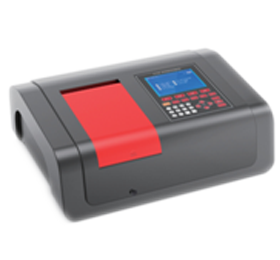
1.HKL-1700 Vis Spectrophotometer for drinking water quality indicator
Test Indicators
1) Disinfectant Indicators: Residual chlorine, Chloramine, Ozone, Chlorine dioxide.
2) Toxicological Indicators: Arsenic (As), Hexavalent chromium (Cr6+), Cyanide (CN-), Formaldehyde (HCHO).
3) General Chemical Indicators: Volatile phenols, Anionic synthetic detergents.
Features
1) Wide Wavelength Range: Meets the requirements of various fields for wavelength coverage.
2) Fully Automated Design: Achieves the simplest measurement method.
3) Large-scale integrated circuit design greatly enhances system scalability and reliability.
4) High-Performance Optical Design: Utilizes imported light sources and receivers to ensure high performance and reliability.
5) Rich Measurement Methods: Features various measurement modes such as wavelength scanning, time scanning, multi-wavelength determination, multi-order derivative determination (optional), dual-wavelength, triple-wavelength (optional), and DNA/protein measurement (optional), meeting diverse needs. Results can be displayed directly on a 6-inch large screen.
6) Flexible Accessory Options: Optional accessories include single-cell holder, manual four-cell holder, manual eight-cell holder, automatic eight-cell holder, glass holder, test tube stand, and cuvettes of different specifications (1cm, 5cm, and 10cm).
7) Measurement data can be output via a printer and is equipped with a USB interface.
8) Measurement parameters and data can be saved even after power-off for user convenience.
9) More precise and flexible measurement requirements, such as spectral scanning, can be achieved through PC software.
Technical Parameters
1) Wavelength Range: 190–1100 nm
2) Spectral Bandwidth: 1.8 nm
3) Wavelength Accuracy: ±0.3 nm
4) Wavelength Reproducibility: ≤0.1 nm
5) Transmittance Accuracy: ±0.3% τ (0–100% τ), ±0.002 A (0–0.5 A), ±0.003 A (0.5–1 A)
6) Transmittance Reproducibility: ±0.15% τ (0–100% τ), ±0.001 A (0–0.5 A), ±0.0015 A (0.5–1 A)
7) Stray Light: ≤0.03% τ (220 nm NaI, 340 nm NaNO2)
8) Stability: 0.0005 A/h (after warm-up at 500 nm)
9) Photometric Modes: Transmittance, Absorbance, Concentration, Energy
10) Wavelength Adjustment: Automatic
11) Photometric Range: -4–4 A
12) Display: 6-inch high-brightness LCD screen
13) Detector: Imported silicon photodiode
14) Light Sources: Imported tungsten lamp, imported deuterium lamp
15) Power Supply: AC 220 V/50 Hz or 110 V/60 Hz
16) Power Consumption: 120 W
17) Dimensions: 560 × 450 × 230 mm
18) Net Weight: 28 kg
Configuration
Serial | Name | Number |
1 | Main Unit | 1 set |
2 | 1 cm Quartz Cuvette | 2 pcs |
3 | 1 cm Glass Cuvette | 4 pcs |
4 | Dust Cover | 1 pc |
5 | Power Cord | 1 pc |
6 | User Manual | 1 pc |
7 | Software Suite | 1 set |
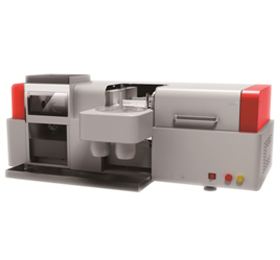
2.HKL-15586 AAS for metal elements in Drinking water
Test Indicators
1) Flame Atomic Absorption (FAA): Fe, Mn, Cu, Zn
2) Flame Atomic Absorption (with Hydride Generator): Se
3) Graphite Furnace Atomic Absorption (GFAA): Cd, Pb, Al
Technical Parameters
1) Flame Atomizer
(1) Burner: Full titanium burner, compatible with 50mm or 100mm universal burner.
(2) Nebulization Chamber: Polymer anti-corrosion explosion-proof Nebulization chamber.
(3) Nebulizer: High-efficiency glass nebulizer (customizable).
(4) Ignition Method: Microcomputer-controlled automatic ignition.
(5) Gas Control: Japanese imported mass flow meter, fully automated microcomputer control system.
(6) Characteristic Concentration (Cu): <0.015 μg/ml/1%
(7) Detection Limit (Cu): <0.002 μg/ml
(8) Precision (Cu): <0.5%
(9) Piping Module: Sealed full stainless steel piping inside the machine, lifetime leak-free replacement, avoids plastic pipe aging.
(10) Safety Features: Gas leakage alarm, anti-flashback automatic protection, and automatic power-off in case of abnormalities.
2) Graphite Furnace Atomizer
(1) Heating Mode: Longitudinal heating
(2) Temperature Control Method: Longitudinal optical temperature monitoring for graphite tube inner wall temperature.
(3) Temperature Control Range: Ambient temperature to 3000°C
(4) Programmed Temperature Control: Fully automated 20-step temperature programming; In-situ enrichment up to 20 times.
(5) Characteristic Mass (Cd): 0.4×10⁻¹²g
(6) Detection Limit (Cd): 0.4×10⁻¹²g
(7) Precision (Cd): ≤2% (automatic sampling), ≤3% (manual sampling)
(8) Cooling Water System: Optional water circulation unit
(9) Safety: Graphite tube failure alarm, Water flow and air pressure monitoring, Over-temperature protection for cooling water
3) Automatic Sampler
(1) Sample Tray: 150 positions
(2) Injection Volume: 0.01~100 μl
(3) Minimum Volume: 0.01 μl
(4) Injection Volume Repeatability: 1%
(5) Repeated Injections: Up to 99 times
(6) Cleaning Container Volume: 500 ml
4) Data Processing
(1) Measurement Modes: Flame mode, Hydride Generation mode, Graphite Furnace mode.
(2) Concentration Calculation Methods: Standard Curve Method (1st to 3rd), Standard Addition Method.
(3) Replicate Measurements: 1-99 times, calculation of mean value, standard deviation, and relative standard deviation.
(4) Result Output: Parameter printing, Data report printing, Graphical output printing, Export capability to WORD/EXCEL formats.
3.Gas Chromatography
Test Indicators
Trichloromethane (Chloroform), Carbon Tetrachloride
Apparatus
Gas Chromatograph (GC)
4.Ion Chromatography
Test Indicators
1) Inorganic Non-Metals: Soluble fluorides, chlorides, nitrates, and sulfates
2) Disinfection Byproducts: Chlorites, chlorates, bromates (including trace levels)
Apparatus
Ion Chromatograph (IC)
5.Mercury Analyzer
Test Indicators
Mercury (Hg)
Apparatus
Mercury analyzer
6.Potentiometric Titrator
Test Indicators
1) PH Value: Acid-base titration
2) Total Hardness: Complexometric titration
3) Oxygen Demand: Potassium permanganate method
Apparatus
Potentiometric titrator with corresponding measurement modules
7.Other Equipment
Category | Test Parameter | Method |
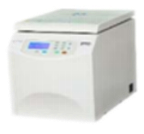
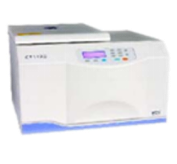
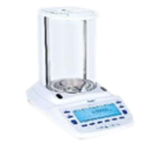
Physical Indicators | Color Turbidity Total Dissolved Solids (TDS) Odor / Taste Visible Particles | Centrifuge Turbidimeter Balance Olfactory / Taste Test Method Visual Inspection Method |
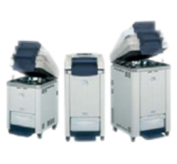
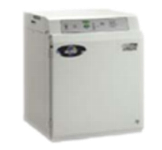
Microbiological Indicators | Total Plate Count Total Coliforms Thermotolerant Coliforms Escherichia coli | Incubator, Autoclave |
Radiological Indicators | Gross Alpha Activity Gross Beta Activity | Low-Background Alpha/Beta Counter |
|
|
|
Centrifuge | Centrifuge | Balance |
|
|
|
Low-Background Alpha/Beta Counter | Autoclave | Incubator |