

Detection Target
Determination of total phosphorus in water
Overview
This solution conforms to the ISO 6878 Water quality —Determination of phosphorus — Ammonium Molybdate spectrometric method. It specifies a method for the determination of total phosphorus in unfiltered water samples by Ammonium Molybdate Spectrophotometry, using potassium persulfate (or nitric acid-perchloric acid) as the oxidizing agent for digestion. The method measures total phosphorus, including dissolved, particulate, organic, and inorganic phosphorus forms.
Principle
Under neutral conditions, the sample is digested using potassium persulfate (or a nitric acid-perchloric acid mixture) to completely oxidize all phosphorus compounds to orthophosphate. In an acidic medium, the orthophosphate reacts with ammonium molybdate to form a phosphomolybdate heteropoly acid. In the presence of antimony ions, this complex is immediately reduced by ascorbic acid to produce an intense blue-colored complex.
Apparatus and Equipment
Glass-stoppered (ground mouth) graduated tubes: 50 ml capacity
Medical portable steam sterilizer or standard pressure cooker: Operating pressure range 1.1–1.4 kg/cm²
HKL-6878 Spectrophotometer for Determination of total phosphorus in water
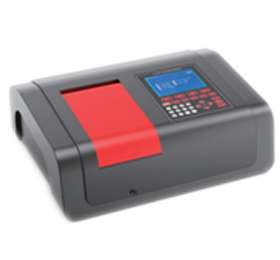
1)Features
① The device adopts single-chip microcomputer control and features a 128*64-bit LCD display.
② The large LCD screen can display multiple sets of data.
③ Ample memory space allows for the storage of multiple datasets and curves.
④ Automatic zero and 100% adjustment functions.
⑤ Automatic wavelength adjustment.
⑥ Automatic filter switching.
⑦ Wide sample cell range (5mm to 100mm).
⑧ Supports standard curve measurement with up to 10 calibration points.
⑨ Allows quantitative measurement by directly inputting K and B factors to establish a standard curve.
⑩ Enables standard curve creation by inputting standard samples and corresponding concentration values for quantitative measurement.
⑪ Retains standard curve parameters and measurement settings even after power-off.
⑫Equipped with a universal parallel printing interface for printing headers, measurement data, curve parameters, standard sample points, and curves.
⑬ Includes a USB interface.
⑭ Supports PC software control for more precise and flexible measurements, such as spectral scanning.
2)Technical Parameters
① Wavelength Range: 320-1100 nm
② Spectral Bandwidth: 2 nm
③ Wavelength Accuracy: ±0.5 nm
④ Wavelength Repeatability: ≤0.2 nm
⑤ Transmittance Accuracy: ±0.3% τ
⑥ Transmittance Repeatability: 0.15% τ
⑦ Stray Light: ≤0.05% τ (tested with NaNO2 at 340nm wavelength
⑧ Stability: 0.001 A/h (after warm-up at 500 nm)
⑨ Measurement Modes: Transmittance, Absorbance, Concentration, Energy
⑩ Wavelength Adjustment: Automatic
⑪ Photometric Range: -0.3 to 3 A
⑫ Display: 128×64 LCD
⑬ Detector: Imported silicon photodiode
⑭ Light Source: Imported tungsten lamp
⑮ Power Supply: AC 220 V/ 50 Hz or 110 V/ 60 Hz
⑯ Total Power: 120 W
⑰ Dimensions: 480×350×220 mm (L×W×H)
⑱ Net Weight: 11 kg
All glassware should be soaked in dilute hydrochloric acid or dilute nitric acid, then rinsed thoroughly with tap water and purified water.
Reagents and Materials
Table 1 List of Reagents and Solvents | |
Name | Name |
Sodium hydroxide | Ascorbic acid |
Nitric acid (HNO3) | Ammonium Molybdate |
Sulfuric acid (H2SO4) | Potassium antimonyl tartrate |
Perchloric acid (HClO4) | Phenolphthalein indicator |
Potassium persulfate | / |
Digestion (Potassium Persulfate)
Take 25 ml of the sample in a stoppered graduated tube. Shake the sample thoroughly before pipetting to ensure a representative portion containing both dissolved and suspended matter. If the phosphorus concentration in the sample is high, the sample volume may be reduced.
Add 4 ml of potassium persulfate to the sample. Securely stopper the tube and fasten the cap with a small piece of cloth and string. Place the tube in a large beaker and heat in an autoclave. Once the pressure reaches 1.1 kg/cm² (corresponding temperature: 120°C), maintain this condition for 30 minutes, then stop heating. Allow the pressure to return to zero before removing and cooling the sample. Dilute the digested sample to the mark with water. (Note: If the sample was preserved with sulfuric acid, neutralize it before digestion with potassium persulfate.)
Add 1 ml of ascorbic acid solution to each digested sample and mix well. After 30 seconds, add 2 ml of Acid molybdate solution and mix thoroughly. Then, measurements were taken using a HKL-6878 Spectrophotometer for Determination of total phosphorus in water.
Place the solution at room temperature for 15 minutes. Then, measure the absorbance at 700 nm using a 30 mm cuvette with water as the reference. Subtract the absorbance of the blank test, and determine the phosphorus concentration from the calibration curve.
Calibration Curve Preparation
Take seven stoppered graduated tubes and add 0.0, 0.50, 1.00, 3.00, 5.00, 10.0, and 15.0 ml of phosphate standard solution, respectively. Dilute each to 25 ml with water, and then proceed with the analysis according to the measurement procedure. Using water as the reference, measure the absorbance of each standard solution. After subtracting the absorbance of the blank test, plot the calibration curve by correlating the corrected absorbance values with the corresponding phosphorus concentrations.
Expression of Results
The total phosphorus concentration is expressed as C (mg/L) and calculated using the following formula:
C=m/V
m = Measured phosphorus content in the sample (μg)
V = Volume of sample used for measurement (ml)
Table 2 Calibration Curve Data | |||||||
Standard Solution (ml) | 0.00 | 0.50 | 1.00 | 3.00 | 5.00 | 10.0 | 15.0 |
Content (μg) | 0.00 | 1.00 | 2.00 | 6.00 | 10.0 | 20.0 | 30.0 |
Absorbance | 0.000 | 0.031 | 0.060 | 0.180 | 0.296 | 0.581 | 0.891 |
Calibration Curve | Y=a+bx a=0.0005 b=0.0295 r=0.9998 | ||||||
Table 3 Actual Sample Measurement Data | ||
1 | 0.299 | 0.40 |
2 | 0.305 | 0.41 |
3 | 0.312 | 0.42 |
4 | 0.305 | 0.41 |
Mean value (μg/ml) | \ | 0.41 |
Standard deviation (S) | \ | 0.009 |
Relative standard deviation (%) | \ | 2.18 |