

Detection Target
Taking the determination of certain elements in water samples as an example, such as copper, cadmium, and mercury.
Overview
The continuous development of industrialization has led to significant heavy metal pollution in water resources. The key to resolving this problem is removing the heavy metals present in water. Due to the inherent characteristics of heavy metals in water, they do not naturally disappear and are highly concealed. Therefore, water quality assessment requires further refinement of detection technologies to pinpoint their presence and develop targeted solutions to further ensure water quality. Water pollution has become a major concern in modern society, and heavy metal pollution detection is a key factor. Water is essential for human survival, so ensuring water quality is crucial for ensuring our future health and safety.
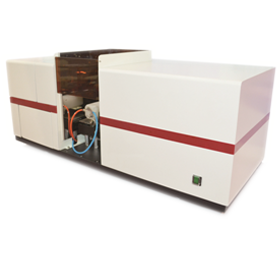
HKL-8288 AAS for Determination of metal elements in water quality
Test Elements
The primary measured elements are heavy metals in water quality, mainly including seven elements: cadmium (Cd), chromium (Cr), lead (Pb), gold (Au), silver (Ag), copper (Cu), and iron (Fe).
Test Method (Using Cu and Cd in Water Samples as Examples)
1. Instruments and Reagents
The analysis was conducted using flame atomic absorption spectrometry (FAAS) and graphite furnace atomic absorption spectrometry (GFAAS). The instruments and reagents used in this process include:
1) Flame-Graphite Furnace Integrated Atomic Absorption Spectrophotometer.
2) Platform graphite tubes, copper hollow cathode lamp, and cadmium hollow cathode lamp.
3) Key reagents: A mixed standard solution was prepared by serial dilution of 100.0 mg/L Cu and Cd standard solutions using 0.1 mol/L nitric acid. Standard Solution A: Cu concentration = 10.0 mg/L, Cd concentration = 1.0 mg/L. Standard Solution B: Cu concentration = 1.0 mg/L, Cd concentration = 0.1 mg/L, and Ultra-pure nitric acid.
2. Operating Parameters
1) Flame Atomic Absorption Spectroscopy Parameters
Cu Analysis: Wavelength: 324.7 nm, Lamp current: 2.0 mA, Slit width: 0.2 nm
Cd Analysis: Wavelength: 228.8 nm, Lamp current: 3.0 mA, Slit width: 0.2 nm
2) Graphite Furnace Atomic Absorption Spectroscopy Parameters
Cu Analysis:
Drying temperature: 110.0°C, Hold time: 30.0 s
Ashing temperature: 800.0°C, Hold time: 20.0 s
Atomization temperature: 2300°C, Hold time: 2.0 s
Atomization temperature: 2500°C, Hold time: 20 s
Cd Analysis:
Drying temperature: 110.0°C, Hold time: 30.0 s
Ashing temperature: 700°C, Hold time: 20 s
Atomization temperature: 2000.0°C, Hold time: 2.0 s
Cleaning temperature: 2500.0°C, Hold time: 2.0 s
3. Test Method
1) Atomic Absorption Flame Method: Filter the water sample containing 0.02 mol/L nitric acid into a 200.0 ml standard high-form beaker. Concentrate it by low-temperature evaporation on a hot plate and adjust the volume to 5.0 ml. Transfer the entire solution into a 10.0 ml standard colorimetric tube, rinse the beaker walls twice with water, dilute to the standard mark, and mix thoroughly. Simultaneously, concentrate and adjust the volume of deionized water containing 0.02 mol/L nitric acid as a blank control. Determine the copper and cadmium content according to the aforementioned working parameters.
2) Graphite Furnace Atomic Absorption Method: Transfer the water sample containing 0.02 mol/L nitric acid into a small plastic cup and place it in the autosampler tray. The sampler automatically aspirates a 20.0 μL aliquot of the sample and injects it into the platform graphite tube. The temperature program is set according to the aforementioned working parameters for detection.
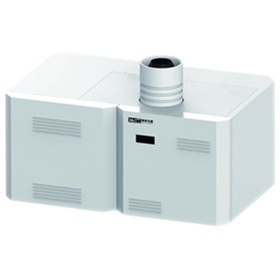
HKL-17852 AFS for Determination of mercury content in water
Test Elements
The primary measured elements are Hg and As.
Test Method (Taking the determination of mercury as an example)
1.Instruments and Reagents
1) Instruments: A fully automatic dual-channel atomic fluorescence spectrometer equipped with a dedicated mercury hollow cathode lamp; ultrasonic cleaner; and micro centrifuge.
2) Reagents:
① Mercury standard solution: Prepared by stepwise dilution of a standard mercury stock solution (100 μg/ml, single-element mercury standard solution) to obtain an intermediate mercury standard solution (10.00 μg/ml) and a working mercury standard solution (0.10 μg/ml).
② Hydrochloric acid, chloroform, potassium hydroxide, potassium borohydride, potassium permanganate, and potassium persulfate, all of Guaranteed Reagent purity; high-purity argon gas. Deionized water was used throughout the test. All glassware was pre-treated by soaking in (1+4) HNO3 for 24 hours, followed by thorough rinsing with deionized water before use.
2. Sample Preparation
Mercury in environmental wastewater exists in various forms. Prior to instrumental analysis, all mercury species must undergo pretreatment to ensure conversion to Hg2+ in solution. Take 50 ml of wastewater sample in a 100 ml conical flask, then add 4.0 ml of 0.3 mol/L potassium permanganate (KMnO4) and 4.0 ml of 0.2 mol/L potassium persulfate (K2S2O8). Heat the mixture in an 80°C water bath for 1 hour. Subsequently, add a few drops of 20% hydroxylamine hydrochloride (NH2OH·HCl) to reduce residual oxidants. After adding hydroxylamine hydrochloride, subject the sample to ultrasonic oscillation to remove generated chlorine gas. Transfer the solution into a 100 ml volumetric flask, dilute to the mark, and mix well for further analysis. For wastewater containing oils, extract and remove them using chloroform (CHCl3). For turbid samples, perform centrifugation, collect the supernatant, and filter through a 0.45 μm microporous membrane.
3. Standard Curve and Sample Measurement
Prepare a 20.0 ng/ml mercury standard solution and transfer it to the automatic dilution bottle. The instrument automatically dilutes it into mercury standard solutions with concentrations of 1.0, 2.0, 5.0, 10.0, 15.0, and 20.0 ng/ml. After the instrument stabilizes, measure the blank and establish the standard curve. The samples are analyzed using the same method.
4. Operating Conditions
The working conditions for the atomic fluorescence spectrometer are as follows: mercury lamp current at 50 mA, negative high voltage at 300 V, atomizer temperature at 300°C, atomizer height at 8 mm, carrier gas flow rate at 500 ml/min, shielding gas flow rate at 1000 ml/min, read time at 10 s, analysis delay time at 2 s, measurement mode as a single standard curve, and reading mode as peak area. Specific parameters can be adjusted according to actual conditions.
5. Carrier Gas Flow Rate
In hydride generation techniques, a certain flow rate of carrier gas (argon) is required. The carrier gas flow rate directly affects the sensitivity of mercury. Test results indicate that when the carrier gas flow rate is too high, the atomic fluorescence intensity of mercury decreases. Therefore, the carrier gas flow rate is selected as 500 ml/min.
6. Carrier Solution Acidity
Using hydrochloric acid as the medium and a 5 ng/mL Hg standard solution as the test subject, the relative fluorescence intensity of mercury was measured under the aforementioned instrumental conditions in hydrochloric acid media with concentrations of 1%, 3%, 5%, 7%, 10%, 15%, and 20% (volume fraction). The results showed that when the acidity exceeded 5%, its impact on the fluorescence intensity became negligible. Therefore, 5% hydrochloric acid was selected as the carrier solution, diluent, and blank reagent.
7. Reductant Concentration
The mass-volume fraction of potassium borohydride (KBH₄) directly affects hydride generation and the quality of the argon-hydrogen flame. The fluorescence intensity of mercury was measured at varying KBH₄ concentrations. Results indicated that if the KBH₄ concentration was too low, the reducing ability weakened, leading to decreased sensitivity. Conversely, if the KBH₄ concentration was too high, excessive hydrogen production diluted the mercury atom concentration, also reducing sensitivity. Within the range of 0.15–0.22 mol/L, the mercury fluorescence intensity remained relatively stable with minimal variation. Thus, a 0.22 mol/L KBH₄ solution was selected as the reductant.